Friday, September 30, 2011

Two Minutes Hat

Hat Week has arrived, and Northwestern is poised to take on Illinois in the high-stakes Battle for the Land of Lincoln Trophy, the Champaign-Urbana Campaign-Urbana, the Uproarial at Memorial, The Donnyzook against the Fistgerald.

I can only use Don King language to express the pugnaciosity of the
hatritude of these two teams. Incidentally, a cursory google image search
for pictures of Don King reveals that apparently he now makes public
appearances only in air-brushed patriotic jackets, although the image to
the right from a Spanish-language version of his wikipedia page
demonstrates perhaps Don King's most audacious publicity strategy yet

One of the first BYCTOM posts expressed the thesis that the Northwestern-Illinois rivalry (then contested for the Sweet Sioux Tomahawk) was the wost rivalry in all of college football. Things have apparently gotten a bit more intense in recent years. One reason for the ratcheting of tensions between the Illini and the Wildcats is the national attention from the Wrigley Field game. Of course, most of that attention stemmed from the setting of the game at the Friendly Confines and because eleventh hour safety concerns caused the creation of the Forbidden End Zone. People tuned into that game for the novelty and to see if straying near the Forbidden End Zone would trigger some sort of Indiana Jones trap that would cover center field with an array of impaled corpses, impossibly disgusting Hollywood insects, and an unnecessary Kate Capshaw musical number made entertaining only by the presence of the guy who has some sort of modified tommy gun that only fires when he is also maniacally cackling.

Despite any recent intra-nois feuding between the two teams, this is a rickety shell of a rivalry game for a number of important reasons. For one, the Illinois-Northwestern game, as far as I can tell, has never had any bearing on the Big Ten title, at least not since college football has abandoned archaic rules such as the Musket Point or the Falconry Circle. Nor has a loss for one team been catastrophic enough to knock them out of any serious contention, with the exception of maybe the last Big Ten slot in a bowl game so lacking in prestige that it was the undercard to an illegal monkey wrestling championship.

"The saber pierced the monkey's liver. He howled for a minute
then lay on the ground, done for. Jake was also done for. He had
1300 pesetas on the big one. The one called El Apuñalador. Jake
swallowed his whiskey. He stopped only to punch his monkey-
minder on the way out of the door. 'Bad advice,' Jake said."
Hemingway ended up cutting the entire monkey stabbing
scene from the The Sun Also Rises.


A college football rivalry should stir up inexplicable passion in both fanbases. There should be the feeling that a crappy season can at least be salvaged a victory over your team's rival. As a Northwestern fan, I do not really get that feeling about the Illini, who I tend to support in Big Ten games out of Big Ten former cellar-dweller solidarity. And I'm certain that no fan of a team in the Big Ten has ever uttered the phrase "at least we beat Northwestern" to console themselves because Northwestern, despite its recent run as a respectable college football team is still historically the worst team in the history of big-time college football, and Big Ten teams are still reeling in disbelief that they can lose to Northwestern under any circumstance, even blatant Northwestern chicanery such as surreptitiously replacing the offensive line with farming equipment or switching out an opponent's regular hypnotist with an evil hypnotist.

There are some sources of rising tensions between the teams and fans (I enjoy using the diplomatic reporters' phrase "rising tensions" when I'm talking about something as hilariously inconsequential as college football, as if Zook has given some sort of saber-rattling speech on the steps of the Illinois athletic department announcing a tariff on crew cuts or Fitz has recognized the Illinois backup as their legitimate quarterback and will only agree to play defense against him). On this Champaign-area radio show, for example, the co-hosts play a clip of Illinois coach Paul Petrino complaining about Pat Fitzgerald's description of Northwestern recruits followed by one of the hosts heroically attempting to get angry about Northwestern (the callers, for their part, don't seem to share his enmity about Northwestern and are mostly cautiously optimistic about the 4-0 Illini in a shocking display of reasonableness by callers to a sports talk radio show). Chicagoland Illini players led by Martez Wilson seem to take exception to Northwestern's "Chicago's Big Ten Team" slogan after the 'Cats's marketing strategy has successfully managed to make Northwestern a household word in Chicagoland households filled with Northwestern alums or fans of a Big Ten team that is currently playing Northwestern.

An Illini fan takes exception to the self-proclaimed
"Sausage King of Chicago" noting that there are
representatives from the finest Midwestern sausage
factories all throughout the Chicagoland area


I'm always fascinated by athletes such as Wilson applying ex post facto bulletin board material to their wins. After all, it takes an exceptional amount of skill, dedication, and focus to become a college athlete. I'm assuming that Martez Wilson would have played well even if Northwestern's athletic department had marketed the team as the Mewling Feeblemen of the Big Ten because he's Martez Wilson and he tends to play well in football games because he is a very good football player. This effect, however, permeates football on all levels. Perhaps the most dramatic examples come from the Patriots episodes of NFL Films's excellent America's Game Superbowl retrospectives. Patriots players constantly talk about getting motivated by slights such as a team packing its luggage to the next playoff game. In one hilariously melodramatic scene before the 2005 Super Bowl, Bill Belichick's pregame speech consists of reading out the Eagles' planned parade route. The players claimed in interviews how much this speech motivated them, although I suspect that most of their impetus to win came from their life-long dedication to excelling in football culminating in the most important game in their professional lives. What I find great about these slights is that players and coaches are apparently furious about foresight and logistics more than anything, as if Boston did not have plans for a championship parade and at the last minute just found a bunch of cars and ticker tape sitting unused in a basement in Faneuil Hall.
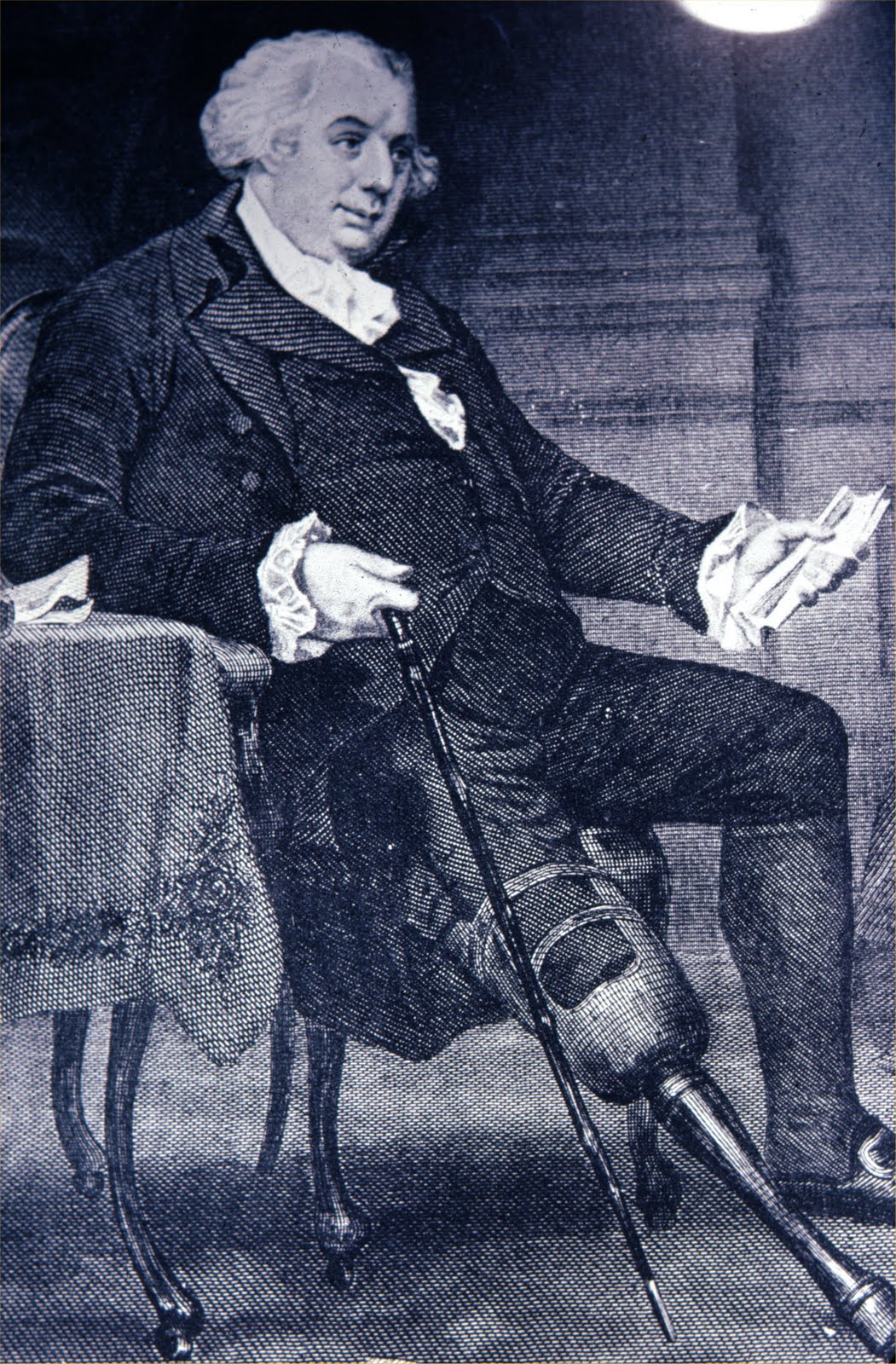
A respectful lack of preparation left Boston
desperately lacking festive implements for
the Patriots' championship parade left
players triumphantly waving around
artifacts such as Gouveneur Morris's leg
stump


Another factor weighing against this inconsequential rivalry game is the Land of Lincoln Trophy, which I've taken to calling The Hat. This is clever because the trophy is literally a hat. But in a college football world littered with hat-based trophies, it is the worst of all possible trophy hats. The Land of Lincoln trophy is a hat trophy permanently attached to a base. This is disastrous. If your team is saddled with a hat trophy, the least you can do is go whole hog and make it into an actual hat that you can put on your head in triumph. Instead, all players can do with this trophy is hold it up or, more satisfyingly, rip it violently from its base and then parade around with it in all of its goofy hat trophy glory while yelling Lincoln slogans such as "A hat trophy divided against itself can be worn." On the other hand, at least it is not as ridiculous as the trophy ideas up for vote for the Iowa-Nebraska LEGENDS DIVISION showdown.

Options include a corn bowl FILLED WITH REAL CORN or a corn cob shyly
waving a husk arm


Of course, possibly of more interest to Northwestern fans is how the team rallies around all-everything quarterback Dan Persa. If Persa can return to last year's impressive form, the Wildcats could be a factor in the Big Ten, but if it sputters against the impressive Illini defense, it may be a short season.

AMERICA'S GAME FOR AMERICANS

If you do choose to check out the America's Game retrospectives, I highly recommend watching the 1976 Raiders episode. It captures the essence of the 1970s raiders: a fully functioning Al Davis in his prime, John Madden calling refs "jerks" before succumbing to the sweet life of luxury buses and multi-fowl meat concoctions, players alighting from buses wearing full-length mink coats, and this guy.

Raiders announcer Bill King spent the 1970s nearly indistinguishable from a
Get Smart villain called the Groovy Guru


I would say that the 2000 Ravens one is also notable for Trent Dilfer's appearance and the comical discrepancy between the amount of credit he gives himself for the Ravens' victory versus everyone else in the entire universe, but now you can watch ESPN and get the same effect with the unfortunate omission of Shannon Sharpe soliloquies.

CLASSICAL MUSIC RIOT

Hopefully the spirited rivalry between Northwestern and Illini fans will remain in check this weekend and no major riots will ensue. Of course, while a Wildcat-Illini imbroglio seems relatively unlikely, there are all sorts of triggers to incite crowds, such as operas and ballets. Wikipedia has helpfully compiled a list of classical music riots, although the writer of the page serves as a wet blanket to the whole thing by noting that "the usual respectful and sedate manner of classical music audiences means that any sort of rough behavior, ranging from catcalls to shoving, can be seen as a comparative 'riot'."

Probably the most famous of these disturbances is from the Paris premier of Igor Stravinsky's Rite of Spring. The combination of the music and Vaslav Najinsky's choreography apparently stunned the crowd, who reportedly began yelling, and inevtiably descended into fisticuffs in the aisles, as one does. There is even a disputed account of French composer Camille Saint-Saëns taking umbrage at the use of the bassoon and storming out. The most influential opera riot is certainly the 1830 performance of Daniel Auber's La Muette de Portici, which ignited national sentiment and spurred opera lovers into the streets to rebel against their iron-fisted Dutch overlords.

This 1831 Jacobus Schoemaker Doyer
painting depicts Dutch ship captain Jan
Van Speyck detonating his gunboat before it
can be captured by Belgian rebels. Van
Speyck can't believe it either


Few of the other riots seem as dramatic. For example, one of these riots involves a 1927 performance of George Antheil's Ballet Méchanique, a piece that utilized mechanical sounds, such as fans simulating airplane propellers. According to the wikipedia page, "the fans were positioned to blow into the audience, upsetting the patrons." Another ended poorly for composer Erik Satie. His surrealistic ballet Parade involved collaboration with Picasso who built the sets, and Serge Diaghilev Ballets Russes company. Satie took exception to a poor review and sent an angry postcard to the reviewer. The reviewer then sued him and, again, as whoever wrote this wikipedia page put it "at the trial Cocteau was arrested and beaten by police for repeatedly yelling "arse" in the courtroom. Satie was given a sentence of eight days in jail."

LESS CHAT, MORE HAT

They're coming for the Hat, Illinois. You'd better be prepared because when Fitz knows there's hat on the line, he's going all out. All out for the hat. For weeks, he's thought of nothing but hat. And now it is upon him. Him and the team. Two coaches. Two teams. One state. One hat. The entire nation is watching, and they only want to know one thing: at the end of the day, who is going home with the hat? Nothing else matters other than the hat.


Hat.

Friday, September 23, 2011

March of the Steel-Man

After a strong showing against Boston college and Eastern Illinois, the Wildcats ran into trouble at West Point and conceded their first defeat to the Black Knights. The Wildcats had difficulty containing Army's treacherous triple option chicanery led by their quarterback Trent Steelman, who has immediately become part of a secret army cryogenics program that will allow him to run the 2150 Army robot football team as triple-option robot quarterback T.R.E.N.T. Steel-Man.

Robot football is only a small part of Future Congress's robot
sports initiative


The loss was at least timed well, giving the Wildcats an extra week to prepare for an in-state showdown with hated rival Illinois during Hat Week. Northwestern fans can at least take solace in the fact that the 'Cats will not face the triple option again this season, that Dan Persa may return against the Illini to spark the offense, and that it's nearly fox hunting season.

WHAT ON EARTH ARE YOU ON ABOUT, KEN BURNS

Over the past several months, I've been gradually working through the Ken Burns Baseball documentary. The documentary, which ran in nine two-hour "innings" on PBS in 1994, covers the growth of baseball from its cloudy apocryphal origins to a billion dollar sports empire. In an unfortunate coincidence that veers close to actual irony, Burns's 18-hour paean to the National Pastime began airing four days before Bud Selig announced the cancellation of the 1994 World Series, the most damaging blow to baseball in my lifetime with the exception of its development as a platform for red-faced sports columnists to bloviate about steroids and wage a war against empiricism.

The beginnings of Baseball enjoyably captured the anarchy of the early game, where spectators lined the field just over the foul line ready to interfere with games in progress, celebrate victories with riots, and deal with defeats by also rioting (imagine a nineteenth century Billy Crystal wistfully recollecting the first time he got elbowed in the face at the nineteenth century equivalent of Yankee Stadium).

It's hard to go wrong with early baseball. In case you were
wondering, I would classify the mustaches in this picture as
(counterclockwise from top) malevolent, disdainful, resigned,
and despondent


But despite the mayhem of early baseball, the early chapters did not always hold my interest. Part of it, no doubt, came from the difficulty of describing a kinetic game without the use of film, relying instead on still photographs, document readings, and music. Despite this setback, Burns does nothing to enliven the film; he uses a music and actor template as monochromatic as his faded sepia photographs. As far as I can tell, the vast majority of the music of the first four or so hours of Baseball consists of three pieces: a solemn accoustic guitar version of the Star Spangled Banner, a mournful piano rendition of Take Me Out to the Ball Game, and Irish ditty The Minstrel Boy, which I actually enjoyed because I associate it with Sean Connery plummeting down a 60,000 foot canyon (Connery's singing the tune to the Minstrel Boy, but the words to the hymn "The Son of God Goes Forth to War"). So the film experience consists mainly of listening to one of those three tunes under the mellifluous voice of inescapable public radio gadfly Garrison Keillor, whom I've always suspected of using his folksiness as a cover for his true nature as a ruthless Midwestern media mogul.

You tell the Williams Sisters Jug Band that
if they want to play the Pella County Jug
Band festival, I'm going to need to see some
Williams Sisters jugs


But if Baseball had merely consisted of repetitive music, photographs, and documents read by people such as Garrison "I own the fucking autoharp circuit" Keillor, it would still be fairly edifying. Instead, Burns pads probably half the film with unnecessary talking head interviews with pointy-headed mythology of baseball folks who drone endlessly about the beauty of the game of baseball and the pace of baseball and the rhythms of baseball and how baseball is a metaphor for doing things in American way with this, our national (American) pastime, baseball. This, in my opinion, is a disastrous choice. With few exceptions (such as Buck O'Neil), most of these people have no connection or insight into baseball beyond their desire to display their bow-tie collections and book-lined studies. At least George Plimpton is there to liven things up with his mystifying quasi-British accent.


"Tally ho, chaps, who is up for a rousing game of foot-ball?" I've
always been curious how Plimpton expected to fit into a group of
Detroit Lions that included Alex Karras (below), who seemed prone to
less literary flights of fancy. In the book, he noted the accent made
him stand out, describing it as "an eastern seaboard cosmopolitan
accent that they thought was 'British.' They delighted in imitating
my quarterback signal-calling. After practice, I'd hear them
yelling the numbers in the shower: '...fawty-foah, fawty tew.'"
The moral of this story is to read Paper Lion if you have not already,
it's a really good book.

UPDATE: Plimpton on Karras's wrestling career (see comments)

The point at which I stopped watching Baseball is in the seventh inning, in which Burns chooses to focus on the rivalry of the New York teams in the early 1950s, which meant that he is responsible for unleashing upon the world Billy Crystal's baseball nostalgia. Crystal is one of an apparently endless army of baby boomers ready to pounce from the shadows at any moment with a disarming array of the same fucking story about Mickey Mantle. This is the point where I realized that, with the exception of the Cardinals' Gashouse Gang and the Kansas City Monarchs, a film whose oft-stated theme is baseball as the national pastime had not covered a team outside of New York or Boston at length for the past several hours.

The talking head segments also date the film as Burns's nostalgia peddlers discourse for hours about aspects of evaluating baseball players that are hilariously anachronistic. This is not Burns's or the commentators' fault-- it is unfair and frankly ludicrous to expect any mainstream baseball person in 1994 to have any doubt in the holy trinity of the Triple Crown statistics. At the same time, it is somewhat amusing for noted baseball expert Mario Cuomo to go off for several minutes about how the essence of the game lies in the sacrifice bunt, which imbues players with the (American) virtue of selflessness, while any knowledgeable baseball fan watching the film now knows that the sacrifice bunt is in most situations an unproductive waste of an out that imbues players with a penchant for making dumb decisions for the sake of hide-bound tradition. The problem comes from interviewing a panel of writers hell-bent on spinning nonsensical narratives about How Baseball Is America instead of focusing on mustaches, cheating, and riots.

As a showcase for Burns's meticulous research and ability to unearth an incredible array of documents, photographs, and rare films about baseball, the film is a an undoubted success. But by strategically luring the likes of Bob Costas, George F. Will, and parade of yammerers into a practice field by sending them a telegram that he had sighted an open microphone but then filming them eluding a series of line drives hit by vengeful fungo enthusiasts and then filming this for my amusement, Ken Burns would have made a far stronger film. Or, he could have dropped the talking heads who did not directly participate in baseball and made an amazing 10 hour series.

BYE

It is an unfortunate week for a bye. Not only is it a sudden break in football season just when things are starting to get exciting, it's also an extra week to stew on the Army loss. On the other hand, that is plenty of time to somehow convince yourself that Northwestern has a rivalry with the University of Illinois that anyone cares about. Perhaps Ron Zook can ignite things and give his team a psychological advantage by closing one endzone in order to recall last year's disastrous contest at Wrigley Field. I would not put this past Ron Zook, a master of mind games who always has an extra card up his sleeve, although that card appears to often be enthusiastically yelling a lot (perhaps I'm unfairly mischaracterizing Zook's motivational ploys and he bends spoons with his mind-- if so I apologize, the TV mainly shows the yelling).

Although there's no college football, at least the Bears play the Packers in a historic NFL rivalry game and rematch of last year's NFC Championship game. But, the Bears will start two backup safeties (including Craig Steltz, who I had no idea was still on the team, let alone playing organized football), and are starting an offensive line that is so terrifying even by Chicago Bears standards that there is a decent chance that Sunday's broadcast becomes a Jay Cutler snuff film. Perhaps, however, the Bears will rise to the challenge despite their injuries and defeat the Packers with American pluck and resiliency showcased in this, our national pastime.

Friday, September 16, 2011

Week 3

Northwestern heads to West Point on Saturday to try to maintain its unbeaten 2011 campaign. And, as you may have already noticed, playing Army allows writers to throw caution to the wind and break out every hackneyed military metaphor that we can think of as the Wildcats break camp in Evanston and march to New York, with Coach Fitz surveying the game tape, preparing his strategies, and mustering his young men and by the time I'm finished with this sentence I'm pretty sure Coach Fitz will have shot someone in the chest with a Napoleonic war cannon.

Football presents a rare opportunity to use the word "army"
without any pesky articles


This is the first time the Wildcats have played Army since 1988, a 23-7 loss at West Point. That represents a better mark against Northwestern than the Black Knights' bitter rivals Navy who have never beaten the 'Cats in three tries. Air Force, on the other hand, has beaten Northwestern twice this decade, including a hideous 52-3 thumping in 2002 and a 22-21 heartbreaker that was at the time excruciating, but given that since then Northwestern has lost at home to an FCS team, conceded the largest comeback in the history of major college football, lost two bowl games in overtime and another by blowing a 22-0 lead and allowing two consecutive onside kicks run back for touchdowns by the same player, the pain of the Air Force loss has dulled considerably.

PROUDLY BEATING THE FCS SINCE 2006

The Wildcats' victory over Eastern Illinois was heartening as Northwestern ran over the Panthers. Backup quarterback, Northwestern folk hero, and action movie protagonist Kain Colter had a magnificent day with 109 rushing yards, three rushing touchdowns. Colter's dynamic running is a fantastic asset for the Wildcat offense, but his propensity for taking a pummeling is worrying. I'm not the only one concerned; according to this Skip Myslenski article, after the BC game, Yankees manager Joe Girardi called up Fitz to congratulate him on the win, but also advised Colter to slide more. "He said, 'My nine-year old son taught (New York Jets QB) Mark Sanchez how to slide and he'll be able to teach you too.'" In exchange, Pat Fitzgerald will serve as Joba Chamberlain's fist pump mentor during 2012 Spring Training.

THE AUSTRALIAN RULES

The AFL season is heating up with the Grand Final slated to take place on October 1. I would like to start watching more Australian Rules football, but I'm afraid that too much exposure to it will cause me to inadvertently figure out the rules of the game and stop enjoying it as a celebration of tank-topped mayhem where anything goes and the only rule is survival.

A typical Australian Rules Football match

While Australians play their football without pads, unique armor forms a bizarre footnote in Australian folklore. In 1880 the Australian bushranger Ned Kelly and his men staged one of the most famous shoot-outs in the history of modern banditry. Surrounded by police in the Glenrowan Inn, they emerged wearing overcoats covering thick, plated armor made from scrap metal. The police were initially shocked that their bullets bounced off the gang. As this intricately detailed wikipedia article describes, one constable whose training to fight outlaws contained no section on terrifying berserker helmets shouted "Look out, boys, it’s the bunyip. He’s bullet-proof!" temporarily confusing Kelly with a horrifying mythical creature. The Kelly armor, however, left the legs exposed and soon the constables shot them down with the precision of a band of mustachioed Parises.

Ned Kelly's armor from the State Library of Victoria (l) and the
understated monument at the Glenrowan tourist attraction Ned
Kelly's Last Stand


Kelly survived the shootout, but only long enough to stand trial and hang. Before the shootout, Kelly left a document explaining where he had come from and how he had turned to his life of crime. The letter is fascinating for a number of reasons, not least because it is entirely bereft of punctuation, making the entire narrative essentially a run-on sentence that dwarfs anything that appears here. The National Museum helpfully provides an audio version. Unfortunately, the actor reading the manuscript pauses in seemingly logical places instead of breathlessly rushing through the document as it was clearly intended to be consumed.

It's also the inspiration for a wonderfully bizarre novel by Peter Carey called True History of the Kelly Gang. The whole novel is written as a sprawling letter by Kelly to a fictional daughter telling his life story. Working off of the Jerilderie Letter, Carey apes Kelly's colorful language and his ramshackle syntax in order to paint a portrait of mid nineteenth century Australia and the desperate circumstances of Kelly's impoverished Irish family that ultimately led him to deadly combat while dressed as a robot from a a 1950s television show with limited robot costuming resources.

Proposed cover for possible sequel True Story of the
Teapot Dome Gang. Albert Fall (l) the Secretary of
the Interior jailed for accepting kickbacks for
granting drilling leases for oil companies, had
earlier successfully defended a man accused of
murdering one of his key rivals. Henry Sinclair,
an oil magnate involved in the affair, served six
months in prison for contempt of court after hiring
detectives to spy on each member of the jury.


A FINAL TEST BEFORE THE BIG TEN

The Army game will be the Wildcats' last opportunity to prepare for conference play (for some reason, Northwestern will play Rice in November). It may also be the last of Kain Colter as the starting quarterback if Persa manages to come back against Illinois and play effectively. But I'm looking forward to Saturday's game most of all to see how the Wildcats cope with Army's unconventional play-calling. Army runs the triple option on offense and double eagle flex defense that Fitz describes as similar to the Bears' old 46 and I describe as an organization that a Wesley Snipes character has likely worked for in a direct to video motion picture. As fun as it is to watch the flexbone in action, it will be far more satisfying to see the Northwestern defense stifle it and for Colter to work his magic without earning the ire of Joe Girardi. I have to like the 'Cats' chances this week, but as the Kelly gang has demonstrated, even the strongest defenses have their weak points, even if your head is covered by discarded plowing equipment.

Thursday, September 8, 2011

Home Opener

Northwestern is undefeated after a heartening victory against Boston College despite a complete lack of Dan Persa, who, as we all know, is Chicago's Heisman Candidate Persastrong of Your Greater Chicagoland and Northwest Indiana College Football Programs Near Chicago. I understand that Northwestern is trying desperately to appeal to the Chicago market, but surely this is a slap in the face to to the good city of Evanston.

Evanston has more to be proud of than
being the current home of Chicago's
Persastrong Heisman Candidate. It was also
the home of temperance advocate and
suffragist Frances Willard, shown here in
this 1911 poster by Henrietta Briggs-Wall
creating what appears to be the Village
People of Disenfranchisement

The Wildcats had solid although typically uncomfortable victory led by backup quarterback Kain Colter, freshly arrived from the Northwestern Scrambling Quarterback factory that is located next to factory providing the 'Cats with spindly, jump shooting forwards. Colter ran and passed effectively; his day was marred mainly by a spectacular one-handed Luke Kuechly interception. This was fortunate since Kuechly is a threat not only to to sack a quarterback, but gather a gang of merciless horsemen and sack a quarterback's entire home town, plundering their least fortified grocery stores and taking control of strategically located big box retail outlets-- then I bothered to look it up and saw that Colter is from Denver, which I think is a tall order to sack even for a linebacker as talented as Luke Kuechly, but maybe his band of rough brigands can effectively plunder the city by purchasing unwanted Tim Tebow merchandise at discount bulk prices.

The success of the running game led by Mike Trumpy and Adonis Smith against Boston College's lauded rushing defense was also encouraging. Even the Northwestern defense held firm, shutting down the BC running game in the second half, although they were often victimized by BC's excellent receiver Ifeanyi Momah. On the other hand, if a tall receiver is going to rampage through the Wildcat secondary, I would prefer that he has a name I can shout to the heavens in a blood-curdling cry for vengeance.

MOOOOOOOOOMMMMAAAAAAAAAAAAAAAAAAAHHHH

NEXT UP: EASTERN ILLINOIS

The Eastern Illinois Panthers make their way to Chicago's Big Ten Stadium on Saturday for what has become an annual showdown with a Football Championship Subdivision Team. The Panthers suffered through a 2-9 season last year, but have come on strong with a victory over last season's FCS opponent Illinois State. Like Northwestern, Eastern Illinois has a generic cat mascot, although I have to admit I like the sleek design of their logo.

A subtle adjustment to the EIU logo makes it even more menacing

A convincing win over the Panthers would be an excellent way to start the season, but Northwestern rarely denies its fans the thrill of minor cardiac episodes in its non-conference schedule. Given the fact that students are not yet on campus and the Wildcats' typical draw against non-conference foes, expect Northwestern fans to confuse Panther quarterbacks with deafening silence and use cleverly positioned mirrors to confuse the opposing coaching staff, who will be unable to figure out which section of the stadium contains the real crowd.

THE OCCIDENTAL POTENTATE

The East drew Westerners in the nineteenth century for a number of reasons. Many sought their fortunes. Others were drawn by the prospect of adventure in exotic and unknown countries. Still others sought to overthrow the Emir of Afghanistan and carve out their own kingdom in the Hindu Kush.

Ben Macintyre's Josiah the Great: The true story of the man who would be king follows Josiah Harlan from his youth as a Pennsylvania Quaker to Oriental Potentate. As implied by the title, Harlan likely served as an inspiration for the Kipling story "The Man Who Would Be King" about a pair of British soldiers who establish a kingdom in a remote region of Central Asia using their wits, army training, and the mystical arts of the Masonic Order. The story also became John Huston's epic film of the same name starring Michael Caine and Sean Connery. The movie features a top-5 Michael Caine rant, useful for times that you may find yourself in an impromptu Michael Caine impression contest.

Here are three movies that you would incorrectly assume would
be more likely than The Man Who Would Be King to contain
Sean Connery yelling "THE SLUT BIT ME"

Harlan left Philadelphia on a merchant ship bound for India in 1822 prepared to return home and marry a local girl to whom he wrote awful nineteenth century poetry (it is literally flowery in the sense that Harlan, an amateur botanist, seem to base most of his poetic imagery off of plants). But by the time he reached Calcutta, he received word that his betrothed had spurned him and married another man (sample from a poem lamenting the spurning: How strange thought I so fair a flower/Fit ornament for a Lady's bower/Emblem of love in beauty's form/Should in its breast conceal a thorn.) He vowed he would never return to the United States and took up with the East India Company as a war surgeon despite lacking any sort of training in medicine whatsoever. Given that this was 1824, he likely missed out on becoming an expert on which sort of brandy to offer to musket victims or how to dig around inside a person with a blunt, rusty object.

But Harlan soon grew restless and eventually made his way to the border of British India in Ludhiana. Another Ludhiana resident was Shuja Shah, the exiled Emir of Afghanistan who had been deposed in 1809. Harlan decided he would gather a small force of men, travel through Afghanistan, and secure a network of alliances that would enable Shuja Shah to topple Emir Dost Mohammed Khan and take back his throne. He set off in 1827 with a rag-tag group of mercenaries, stopping to threaten local warlords, heal villagers with his amateur medical techniques, and even progress on his mission of intrigue. But his army soon evaporated and Harlan somewhat unsuccessfully disguised himself as a Muslim holy man in order to get to Peshawar. He found supporters in Peshawar and later Kabul, but Shuja Shah's plan came to naught, and Harlan decided to enter into the service of someone with an actual emperor, Maharajah Ranjit Singh of the Sikh Empire.

Harlan wore down rivals with his
glower power


One of the great strengths of Macintyre's book is its fascinating depiction of the politics of Harlan's Central Asian adventures. Harlan's navigation of court intrigue and easy discovery of willing conspirators form a fascinating snapshot of major rivalries. Harlan himself initially sought to overthrow Dost Mohammed for Shuja Shah. He then served as a general in Ranjit Singh's army in a campaign against Dost Mohammed, narrowly avoiding capture by the Emir thanks to a well-timed act of treachery by one of Dost Mohammed's inner circle. He rose in Ranjit Singh's Court to become a provincial governor, but fell out with the Maharajah over a dispute involving allegations of forgery and a failed attempt to galvanize the infirm emperor with a strong electrical current. Harlan fled in 1836 and, swearing revenge, entered the service of Dost Mohammed Khan.

Rival emperors Dost Mohammed Khan (l) and Ranjit Singh. The
one-eyed Ranjit Singh was particularly fond of all sorts of
drunken bacchanalia using a by all accounts foul alcoholic
concoction based on fermented raisins and possibly containing
small quantities of ground pearls.


It was under the service of Dost Mohammad that Harlan became the Prince of Ghor, although to call him a ruler is overstating things. He acquired the kingdom while on a military maneuver to suppress the Uzbek slave trader and head-chopping enthusiast Murad Beg. On the way, he passed through the Hazarajat, where one chief named Mohammed Reffee Beg offered Harlan his kingdom in exchange for training his troops. Harlan drew up an agreement and then left to confront Murad Beg. He returned to Kabul in 1838, just in time for the British invasion of Afghanistan where his emperor was deposed, he lost his title, and his Kabul home became occupied by an impudent British official. He quit Afghanistan in a huff, decrying the evils of the British Empire. He had been Prince of Ghor for about a year.

The British invasion of Kabul brought Harlan in contact with his old enemy, Alexander Burnes. Burnes gained fame for establishing contact with Bokhara and quickly rose through the Company ranks as an expert in Asian intelligence. Their contact was not surprising; despite the enormous scale of Central Asia, Westerners active in the region all seemed to know each other, and Macintyre revels in describing the often headstrong lunatics that sought their fortunes in the East. Another Harlan enemy, for example, was the explorer Charles Masson, who traveled with Harlan on his initial foray into Afghanistan, but abandoned him at the first sign of trouble. Harlan later informed the British authorities that Masson was an army deserter named James Lewis; Masson was then forced to spy for the British. Burnes met a more grisly end. In 1841, a Kabul mob voiced their displeasure with British government by marching to Burnes's residence and tearing him to pieces.

"Bokhara" Burnes in all his glory (l). Harlan got along better with
truly eccentric figures such as Joseph Wolff, a Jewish-born
Christian preacher who wandered the globe as an apostle of various
Christian faiths to often little effect. According to Mcintyre, Wolff
cut such a ridiculous figure that the fearsome Emir of Bokhara,
who was fond of throwing people into pits, spared Wolff because he
could not stop laughing at him. Finally on the right is
Jean-Francois Allard, Ranjit Singh's top foreign general who
Harlan respected, I suspect, because his facial hair was
ridiculous even by nineteenth century general for the Sikh
Empire standards.

Harlan returned to the United States eventually and hatched schemes to secure federal funding to import camels and grapes. When the Civil War broke out, however, Harlan eagerly joined the Union side because his name was Josiah Harlan and there was a little-known law enacted that said if you had a really Civil-Warry name like Josiah Harlan, you had to fight in the Civil War, no exceptions. Harlan's attempts to bring his expert knowledge of telling Afghan soldiers to stab each other unfortunately led to disaster; his officers did not appreciate his haughty attitude and his complete lack of knowledge of modern military tactics, and Harlan faced a court-martial. Though acquitted, Harlan was old and ill and returned home unable to fight. Harlan never returned to Central Asia.

MAKING SENSE OF SEVERAL UNRELATED ITEMS

Before last week, I assumed that Coach Fitz was an open book, bereft of guile, gamesmanship, or intrigue, unless the repetition of the phrase "our young men" was some sort of Masonic code. Fitz, however, made Persa's availability before the BC game a mystery, obfuscating his intentions with oblique references to pimp walks. He is again remaining somewhat coy about this week, although it seems fairly clear that Persa will not play, especially considering Colter's heroics last week. Nevertheless, the world of college football is second in skulduggery and plotting only to nineteenth century Central Asian diplomacy to the point where I expect slippery characters like Lane Kiffin or Nick Saban to switch teams at halftime parading jewel-bedecked elephants around the stadium in celebration of their perfidy or someone to leave Happy Valley after unsuccessfully galvanizing Joe Paterno.

Tuesday, August 30, 2011

Week 1

The 2011 football season finally arrives this Saturday with the Wildcats jumping right into the fire against a BCS opponent. Though Northwestern opens on the road against Boston College, the Athletic Department has prepared frenzied Wildcat fans by putting up an enormous 44-foot tall mural of Coach Fitzgerald on the South Tower to terrorize opponents, Evanston residents, and passers-by.

The Athletic Department plans to use the giant Fitz poster to disseminate
crucial information to Wildcat supporters. I'll be honest, even I thought it
was excessive to go back to the Lenin poster well on this one, but I could not
possibly resist-- the only way the Athletic Department could possibly goad
me into Soviet propaganda cliché more easily is if they announced they
were immediately changing the mascot to a tractor


Northwestern fans have been in a minor panic over the quarterback situation between a hobbled Dan Persa and near Ticket City Bowl hero Kain Colter who makes up for his inexperience under center with moxie and an alliterative 1950s superhero secret identity name. Northwestern will catch a break by dodging the Eagles' excellent running back Montel Harris who is nursing a knee injury and will not be plying his dark arts against the Northwestern defense. More worrying is the possibility of linebacker Luke Kuechly getting to Persa (if he plays) and sacking him hard enough to cause a minor disruption to the Earth's rotation that wreak meteorological havoc across the surface of the entire planet. This is because Luke Kuechly is 37 feet tall, carries an NCAA-approved battle-axe, is mostly made of malevolence, and trains in the off-season by supping upon the bones of the impertinent who dare disturb him in his lair.

The Dark Curse of the Kuechly can only be lifted if Lou Holtz
can successfully pronounce his name during a live telecast


The Wildcats will hope to set the tone early this year by avoiding erratic performances in non-conference games. This is a Northwestern tradition, dating back to contests against nineteenth century arch-rival Chicago Dental where Northwestern emerged barely victorious and covered with a series of worrisome bite marks.

FIBA BASKETBALL
This week, the FIBA European Championships begins in Lithuania. The tournament also goes by the colloquial title EuroBasket because the only way for it to be more European would be if the logo was a man wearing Capri pants jumping over a Trabant that is blaring disco music. Which would be better than the current theme song, featuring a lively group of Lithuanians belting out the exact sort of bland pop song designed by computers for international sports tournaments instead of a more satisfying Eurovision style imbroglio. At least Marijonas, Montas, and Mia have included the mystifying lyric "Who's gonna weep about losing?/Raise your glass it's time for a bruising," which is the motto of the world's most menacing Toastmasters chapter.

This year, the tournament has expanded from 16 to 24 teams. Unfortunately, FIBA Europe based their decision on how teams fared in qualifying rounds to determine seven of the teams that got their berth instead of a more entertaining system of payola and skullduggery. EuroBasket will also do away with the festive trapezoidal zone to use the more familiar American rectangle. Other new EuroBasket rules have made it illegal to temporarily reform Yugoslavia for the duration of the tournament, split into smaller teams after geopolitical crises, earn victories by promising bail-outs or otherwise take advantage of the Eurozone Sovereign Debt Crisis, or throw up the barricades. Everyone also must have Detlef Schrempf haircuts.

Bourbon intrigue is still legal at Eurobasket provided a
team can provide successfully provide a Bourbon


With the NBA lockout, there will be more NBA participation than usual. France boasts a roster including the NBA's Tony Parker (T.J. didn't quite make the cut), Joakim Noah, Nicolas Batum, and Beethoven in the Age of Romantics. Other notable NBA players include fake German Chris Kaman who was last seen challenging Indiana Jones to fistfights underneath rotating propeller blades, and a powerhouse Spanish team featuring all of the known Gasols, Rudy Fernandez, the mysterious Ricky Rubio, and Serge Ibaka. Of course, the most glorious revelation of Eurobasket is that the Slovenian team not only features 2009 playoff hero Goran Dragic, but also his brother Zoran.

A catastrophe divides Slovenia's team against itself

The team I'm most interested in is Great Britain's squad. The British squad features Chicago Bulls iron man Luol Deng, who is hoping to lead the newly-unified British team to a respectable enough record that they will be allowed to play in their home Olympics. His task will be harder this summer though. Former Bull and master of the difficult Ben Gordon why the fuck are you taking that shot there's 18 seconds on the shot clock and you are falling out of bounds with eight dudes surrounding you because you are literally on top of the opponents bench, oh you made it shot, Ben Gordon, will not be joining Team GB this summer. Unfortunately, it's not part of some long-delayed Reverse Benedict Arnold scheme on the part of Gordon or even part of some sort of insane triple-cross where he starts dunking on his own basket and then announces that he has Bosnian citizenship. Apparently, he's decided he'd rather not risk playing. The British team is also missing its talisman Pops Mensah-Bonsu, who is apparently unstoppable in low-level FIBA tournaments.

The other reason why I'm interested in the British team is because it is not only battling Europe's toughest basketball competition, but also the complete apathy of 99% of the population of the United Kingdom. Fortunately, youtube has a repository of videos from an organization called Back British Basketball that feature street interviews with people uninterested in basketball, and a heroically chipper young man with a megaphone who is attempting to shout at British people until they care about basketball. Here he is, for example, at the Britain-Macedonia game unleashing a Deng chant to the tune of Seven Nation Army in front of a group of bemused spectators. Surely such an effort is worth it to cheer for the team to not embarrass itself so badly as to be forced from the Olympics like a surly bar patron.

RAISE YOUR GLASS, IT'S TIME FOR A BRUISING

The excitement of Wildcat football is almost unbearable this time of year. Feel free to paint all of your unexposed skin purple at your place of business or erect enormous Pat Fitzgerald monuments at your home. They'll understand, unless the neighborhood children are afraid of crew cuts, intensity, and fists.

Thursday, August 18, 2011

A Salacious Posting

August is traditionally a time for quiet reflection, meditation, and installing seatbelts on your couch before spending the rest of the autumn rocketing around your living room from the endless excitement of Northwestern football action. But this August has been chock-a-block with innuendo, Zambrano meltdowns, and scandal so salacious that it would even raise the eyebrow of the most inbred Bourbon aristocrat preternaturally inured to acts of drawing-room depravity beyond comprehension in the New World.

I speak, of course, of the quashing of the plan for Northwestern to intimidate basketball opponents with a hideous all-purple basketball court.

Behold! Who dare enter the Wildcats' fearsome Fortress Dimetapp?

This abomination came from that hated scourge democracy when the athletic department gave fans a chance to vote for their favorite of several new court surfaces. The purple court naturally grew popular as the Internet invariably gravitates toward the ridiculous or the potential site of a Grimace atrocity. The athletic department, however, got skittish and approved a more traditional design that looked more like a basketball court and less than the last thing seen by Mike Teevee. This engendered speculation that the department gleefully ignored the results of an online poll, like a group of Facebook Soviets. Lake The Posts reports that the poll was close enough to run lighting tests on the purple court, which turned out unfavorably because have you taken a look at this thing, it's a giant purple eyesore.

Northwestern's bland new court, shown next to a picture of Leonid Brezhnev,
someone who (like Northwestern's athletic department) would also disregard an online
poll with an iron digital fist, although admittedly my evidence of vote meddling is based
entirely on how much I enjoy using the word quash and socialist-realist paintings of
Brezhnev


Regardless of the courageous attempt by the athletic department to prevent Northwestern from becoming a national joke in basketball with a garish court design, let us not forget the fact that Northwestern is already somewhat of a college hoops punchline. After all, Northwestern basketball is known for the following things:

-Never appearing in the NCAA tournament
-Playing home games in a rustically charming barn
-Fraudulently claiming victory in the 2011 NIT

Therefore, why not gain some national notoriety by playing home games on a fruit roll-up surface (let's assume it's a Fruit Roll-up with a really 1990s-sounding flavor such as BlasterBerry Xtreme Blast)?

YOU HAVEN'T SEEN THE LAST OF CARLOS ZAMBRANO (THAT IS WHAT CARLOS ZAMBRANO THINKS)


This could be the last opportunity to bust out this classy Zambrano Meltdown Recap graphic as the once-brilliant, now mediocre, always entertaining right-hander may have tossed his last pitch as a Cub. Let us remember by clumsily ruining:

Zambrano!

Big Pitcher for the Cubs,
Switch-Hitter, Clubber of Balls,
Player with Rosin and the North Side's Ace Hurler;
Stormy, husky, brawling,
Pitcher of the Big Shoulders:
They tell me you are wicked and I believe them, for I have seen your two-seam fastballs under the park lights whiffing the farm boys.
And they tell me you are crooked and I answer: Yes, it is true I have seen the bats smash and go free to smash again.
And they tell me you are brutal and my reply is: On the faces of beverage dispensers I have seen the marks of wanton anger.
And having answered so I turn once more to those who sneer at this my pitcher, and I give them back the sneer and say to them:
Come and show me another pitcher with pointed hand yelling so proud to be alive and coarse and strong and cunning.
Flinging magnetic bee bees amid the toil of piling pitch on pitch, here is a tall bold slugger set vivid against the little soft rubber;
Fierce as a dog with tongue lapping for action, cunning as a batter pitted against the gatorade,
Blonde-headed,
Arguing,
Whacking,
Planning,
Fanning, breaking, re-fanning,
Under the vines, dust all over his mouth, laughing with white teeth,
Under the terrible burden of destiny laughing as a young man laughs,
Laughing even as an ignorant umpire laughs who has never lost a strike zone,
Bragging and laughing that under his wrist is the pulse, and under his ribs the heart of the bleachers, Laughing!
Laughing the stormy, husky, brawling laughter of Youth, blue-jerseyed, sweating, proud to be Big Pitcher, Switch-Hitter, Clubber of Balls, Player with Rosin and Ace Hurler for the North Side.

A MOST CURIOUS SCANDAL

The last BYCTOM entry featured a list of phrases that it would take to get my attention in an NCAA scandal, callously dismissing NCAA scandals as unworthy of my Victorian outrage. A few days later, Charles Robinson broke the Miami scandal, describing a spectacular set of allegations set amongst a swashbuckling display of NCAA-defying derring-do.

This a photo of me after neglecting to mention that
I'm also interested in articles about allegedly using
a yacht to facilitate off-shore prostitution


My favorite of the allegations involves the bounty system--not only because I enjoy bounties on both the Lee Van Cleef level and as the setting for coconut-based mutinies (according to Arthur Herman's To Rule the Waves, the mutiny on the Bounty ignited after Captain Bligh antagonized his crew with the accusation "Damn your blood, you have stolen my coconuts!"). Devin Hester, now on the Bears, allegedly racked up thousands of tainted booster dollars as a reward for returning kicks and celebrating excessively. I fully support compensating players for drawing hectoring celebration penalties from zebra-striped killjoys, a practice I will encourage when I start my own doomed upstart football league and force boring players to wear jerseys bearing the slogan "HE CELEBRATE INADEQUATELY."

I don't particularly have an interest in the consequences for Miami; I'm mainly enjoying the brazenness of the (alleged) defiance and reveling in the (alleged) sordidness of the whole affair. It would be horrifying to live in a time when a credible fictional scandal concerned the King of Bohemia attempting to cover-up a dalliance with a profligate opera singer that would dash his betrothal to a Scandinavian princess on the rocks of Victorian propriety.

In this Josef Friederich illustration
from A Scandal in Bohemia, Wilhelm
Gottsreich Sigismond von Ormstein,
the Grand Duke of Cassel-Felstein
avoids notice with this casual
diguise.


ALL OF THIS IMPROPRIETY IS MAKING MY HEAD SPIN

NCAA enforcement is part of a long tradition of trying to make some sort attempt to define amateur sports; after all, even the great shamateur cricketer W.G. Grace had been bankrolled with pound notes secreted in his spectacularly bushy beard, and I would be shocked if there wasn't some sort of outcry over a fin de siècle rugby scandal involving illicitly attained top hats, monogrammed handkerchiefs, cane toppers, fox hunting privileges, dirigible tours, or seigniorial rights. Somehow, we will solider on, burdened by the shocking revelation of (alleged) booster malfeasance in college football, brave baseball less a Zambrano, and futilely pretend to enjoy basketball without a garish purple court to serve as the landing point of a thousand Wildcat dunks.

Friday, August 12, 2011

A Return to Wildcat Football in the Month of August

Rejoice, friends! Professional sports may have tainted themselves with tedious labor disputes, the Cubs may be helplessly flailing themselves into oblivion (as I'm writing this, twitter rumors are flying that Carlos Zambrano has cleared out his locker and announced a professional wrestling style non-retirement retirement); a Dickensian bleakness surrounds Chicago sports. But no longer! Wildcat football begins in earnest as players return to Camp Kenosha next week and expectations are high. Fitz has said he has expectations beyond making another "Pizza City Bowl," the excellent presnapread.com has NU ranked #35 in the nation, and Northwestern's marketing department has begun an actual Heisman campaign for senior quarterback Dan Persa.

Persa Strong billboards have appeared throughout the
Chicagoland area trumpeting "Chicago's Heisman Candidate"
although I'm disappointed that none of them feature him
uncomfortably wielding tools within some sort of purple Tron
landscape like this iconic 2005 poster. Clearly the most
menacing Wildcat is Tim McGarigle, who is unfairly given a
chain saw which is overkill on par with allowing Bill
Laimbeer to traverse basketball courts using a fully equipped
war chariot

I have to admit, while I am excited about seeing what Persa can do, I'm worried about the athletic department's potential for hubris in constructing their Ozymandius website. Let's hope that Persa does not become the Northwestern football equivalent of the Palace of Soviets, an enormous Stalinist edifice designed to terrify Moscow residents with a glowering cloud-guzzling Lenin statue.

A drawing of Boris Iofan's winning design for the Palace
of Soviets. The Palace was to take the place of the Cathedral
of Christ the Savior. The German invasion, however, halted
construction on the building and the site was turned into
an enormous public swimming pool


WILDCATS AT CAMP

The return to Camp Kenosha also means the return of media days and interviews. Here is a particularly fascinating passage from Skip Myslenski's interview with Coach Fitz, mentioning Superback Drake Dunsmore's bold statement that he expects the 'Cats to win the division:
"We've got it on our goal board. Our goals are simple. After consistently preparing, we want to win the Legends, win the championship and win our bowl game. I don't think that's unique to just us, though. So now what are we going to do about it? I got no problem with you asking a question and him answering it directly. I'd rather have him do that than sugar coat it and give a B.S. answer and then he walks away and says, 'No, this is how I really feel.'"

I prefer that too, we tell him, attempting to make a joke.

"At the end of the day, guys, we're not starting over here," Fitzgerald goes on, totally ignoring the lame effort. "There's a lot of teams in our league starting over, trying to reinvent themselves. We're far away from there. We crossed that bridge a long time ago. There's a certain set of expectations and if you don't get that kind of stuff done, we should get a little ticked off about it. I think that's the way everybody feels around here."
First off, I'm concerned that Fitz has slipped into casually mentioning the LEGENDS DIVISION like it is a real thing. I'm greatly concerned about slipping into LEGENDS AND LEADERS complacency and firmly believe that every mention of the unbearable division names should come with a bracketed discalimer that LEGENDS AND LEADERS are dumb names for divisions and are greeted by Big Ten fans with Heston-like incredulity. At the same time, I admire Commissioner Delaney's Soviet response to seeing the nearly universal rejection of the names and deciding to force them upon us anyway.

My favorite part of this passage is in the middle where Myslenski gives play-by-play of Coach Fitz artlessly no-selling him on a feeble joke. In Myselnski's defense, I'm fairly sure that Fitz does not have a sense of humor beyond carving giant pumping fist runes into Iowa cornfields and then cackling as he circles them in one of Patrick Ryan's helicopters.

"The aristocrats," concludes Myslenski. Fitz is
unmoved


Fitz's ability to bulldoze anything vaguely interesting with a barrage of inspiring coach-talk is nearly superhuman; if the United States were to fall victim to some sort of horrible catastrophe that involved a large wave of radioactive mutants overrunning our state capitals, he could coolly appear on television and assure us that not only are our young men are doing the best they can to bludgeon enough radioactive mutants with blunt objects to secure a cordon around, say, Lansing, Michigan until the National Guard arrives, they were ticked off at the mutants and were bludgeoning them with chips on their remaining shoulders.

NCAA INVESTIGATIONS

Another college football season comes with another set of scandals of players on the take, clandestine coaches gleefully shattering NCAA regulations for sport, and revelations involving shadowy figures. The largest one caused the removal of longtime Ohio State coach Jim Tressell this spring. To be honest, I have not been following these stories particularly closely even if it means the weakening of a successful rival program. For one, doing so involves taking the NCAA and its byzantine code of regulations seriously while their enforcement and the bizarre half-measures designed by schools to artfully elude them are farcical.

A group of recruiters from an unnamed program evade the
watchful eye of NCAA regulators by meeting high school
underclassment on Berlin's Gelinicke Bridge

I also find these sorts of scandals tiresome because they're not particularly interesting. I refuse to read anything about NCAA scandals unless articles describing them include a close approximation to the following phrases:
  • a network of international operatives
  • as he ignited another NCAA rule book and flung it from a fifth-story window
  • was given a collection of colorful capes
  • he proclaimed from his self-constructed throne
  • but the briefcases were filled with useless confederate dollars
SLOUCHING TOWARDS WRIGLEYVILLE

The Cubs, meanwhile, stood pat at the deadline except trading Kosuke Fukudome to the Indians for a pair of lowly regarded prospects. I was crushed by the trade because Fukudome is one of my favorite Cub players-- he was the only Cub with an on-base percentage over .370 (only two Cubs currently sport OBPs over .350: Reed Johnson and Carlos Zambrano. In fact, using the weighted on-base average metric, Johnson and Zambrano are the Cubs' most effective bats), but more importantly, I really enjoyed the fact that his name was Fukudome.

In Wrigleyville did Jim Hendry
A stately Fuck You Dome decree


HERE COME THE CATS

Football is here! As we speak, the Bears are prepared to attempt to deploy an offense featuring the battered remains of Roy Williams, an offensive line designed for one purpose: murder, and the fearsome spectre of Corey Wootton in the exciting NFL preseason. The 'Cats, meanwhile, hope to improve on last year's withering end to the season en route to a well-deserved bowl victory in Pizza City, Potato Town, the Duchy of Pre-Owned Tires, or even Pasadena in what Delaney is trying to call the Heroic Victory of the Conference Cadres Bowl.