Saturday, September 10, 2022

Is Northwestern Good or is Nebraska in a Grim State of Psychological Collapse

Lost in the thrum of the opener this season in the midst of clumsily shoehorned Irish references and the excitement from a stadium losing control of its payment system to douse spectators in unlimited free beer and the general celebration of Scott Frost's various ineptitudes and nincompooperies is the question of whether Northwestern might actually be kind of good.  That is to say, have the Wildcats discovered a passing attack and brought back their Big Ten-irritating defense enough to get back return to the Fauxltry Powdered Gravy Substitute Bowl or even the Mail Order Nunchuks (For Display Only) Bowl played at an abandoned Discovery Zone?

Here's something that happened in the first half: Ryan Hilinsky, whose identity as starting quarterback was hidden by Pat Fitzgerald by having all passers practice in trench coats and call cadences using the vocal distortion the news uses for mob witnesses absolutely torched Nebraska's defense.  Receivers Malik Washington and Illinois Turn-Hat Donny Navarro were always open. And in the second half, Northwestern's offensive line picked up Nebraska's defense and carried it around like a sack of groceries while the Wildcats' suddenly extremely scary cadre of running backs gobbled up yardage.

Last year's offense was particularly gruesome, but under Fitzgerald the offense has rarely been the point.  Northwestern has flourished when its offensive playbook looked like one of those surrealist toilet paintings.  Last year, the defense also struggled with the departure of its guru Mike Hankwitz and several key upperclassman stalwarts, and it looked like that trend might continue into 2022 as Nebraska quarterback Casey Thompson flung the ball around and made insane video game physics throws on broken plays where he was somehow throwing howitzer passes while moving backwards.  But in the second half, something changed.  Thompson began to falter.  The Wildcats began to get pressure on Nebraska's offensive line, which came out of the locker room all barfed out.  Thompson threw two backbreaking interceptions including one that sealed the win for the 'Cats as Frost fled the premises being pursued by Husker fans who had filled up on free beer and were wielding their corn hats with ill intent.

Frost turns around in terror as he is cornered by Nebraska fans who have formed up in a corn hat testudo formation.

The Duke game should be an interesting test for Northwestern because it will be their first contest this season against a normal team.  I don't know how good Duke is, but it will be a football team that is playing football and not a vaguely football-themed organization in the midst of a deranging psychic collapse.  Scott Frost is the anti-Northwestern; while Fitzgerald frugally aims to win by exactly as many points as necessary with no waste, Frost seems determined to choke as narrowly as possible, and his teams dig deep into an unlimited reservoir of boneheaded special teams gaffes, comically malfunctioning trick plays, and horrendous turnovers at the worst possible moment that can be explained only by deliberate sabotage, hypnosis, or possibly a combination of the two in a nightmarish Manchurian Corndidate Scenario.  The Duke game should show if Northwestern is good enough to win against the types of Big Ten West teams it will need to beat in order to play in December or if they are simply good enough to stand back and allow Frost and the Huskers to sink into madness and despair.

THAT FEELING...WHEN YOU KNOW ME, AL

Ring Lardner covered the Cubs and White Sox in the early twentieth century for a few different papers, but he found the best way to convey the spirit of baseball in those early tumultuous years was not through beat reporting or interviews but from from a series of fake letters written by an oaf.  These collections of letters from fictional pitcher Jack Keefe to his friend Al back home in Bedford, Indiana after joining the White Sox as he tries to establish himself with a Major League pitcher but mainly gets swindled, humiliated, and drunk.  Lardner surrounds Keefe with real life baseball personalities like Charles Comiskey, Kid Gleason, and opponents like Ty Cobb and Christy Matthewson.  Given how popular the series became, I am surprised Ty Cobb didn't try to spike Lardner in his office or hijack and train and try to drive it into him.  

Lardner depicts Keefe as a lazy, stubborn, and prideful jerk who refuses to listen to anyone, constantly searches for excuses for his mistakes including blaming teammates for what he sees as fielding ineptitude, and is quick to anger and ineptly threaten to fight people, but who remains sort of lovable and charming because of the incredible scope of his gullibility.  Lardner has one consistent bit and that is having Keefe describe how he absolutely refuses to do something under any circumstances in one letter and then immediately in the next letter describing how he is doing all of that enthusiastically by regurgitating whatever bullshit someone fed him in order to change his mind.  That is how he negotiates his contract with Comiskey and how he tries and fails to go to the Federal League; it is how he ends up married.  It's one of those devices that starts off as amusing and then gets old when you figure out that is going to happen in every letter and then gets extremely funny as it just keeps happening over and over again to an oblivious Keefe who keeps running into tunnels painted on the side of a mountain and then fuming several colorful but deliberately grammatically desolate letters later about his hatred of left-handed pitchers.

What distinguishes Lardner is the dialogue, which is conveyed in brilliantly rambling passages from Keefe.  Here's an example from when he returns to spring training after ineptly trying to force his way onto the Tigers and meets with Sox coach Kid Gleason:

He says Are you in shape? And I told him Yes I am. He says Yes you look in shape like a barrel.  I says They is not no fat on me and if I am a little bit bigger than last year it is because my mussels is bigger.  He says Yes your stumach mussels is emense and you must of gave them plenty of exercise. Wait till Bodie sees you and he will want to stick round you all the time because you make him look like a broom straw or something.  I let him kid me along because what is the use of getting mad at him? And besides is all O.K. even if he is a little rough.

Ping Bodie, who Keefe makes look like a broom stick or something.
 

You Know Me, Al is only a small fraction of the Busher's Letters series because they were so popular.  According to Wikipedia, Lardner wrote dozens more, only a few of which were anthologized; the immediate sequel, which has Keefe swearing up and down that he will absolutely not go on an all-star world tour covers his inevitable time on that world tour.  There was apparently a series where Keefe goes into the army and fights in World War I where I imagine he is persuaded to go over the top dozens of times a day after dubious promises of increased pay or because a field officer convinced him that a German machine gun nest was operated by former Cub Fritz Mollwitz.  Larnder seemed to grow increasingly resentful of the Busher content fans demanded, which included a syndicated newspaper comic.


Here's an example of the comic which also gives a pretty decent sense of what the book is like, found here.

As Rob Manfred reaches his apotheosis of Rules Mongering and ushers in all sorts of clocks and restrictions on what areas of the field players are allowed to be on, it raises the question of to what extent the baseball in a book like You Know Me, Al will even be legible in the future.  One of the appeals of the game is that its ruleset has remained relatively static when compared to the other major popular sports in the United States; a football game from 1914 is for all intents and purposes a different game then what you see today, whereas the baseball scenes that Lardner narrates through Keefe's self-aggrandizement and various feuds and grudges that he believes are causing all of his problems largely, with exceptions for Keefe using increasing darkness to his advantage and pitchers hitting the ball with bats, translate to modern baseball fans.  One major change, though, would be Keefe's role, where instead of waiting around for a start, he would be bouncing in between the minors and the majors to throw two innings before being sent back down only to wait for the next injury.  I'm sure Keefe would have a lot to say about that, to Al.

ENTER THE SERPENT'S MAW: A BUCK DUCKETT NOVEL

You may have been wondering what has happened to the NCAA's teams of investigators looking out for illegal payments of free socks to college athletes after name, image, and likeness policies? Well, I have no idea.  I did not do any research about this.  But here is another installment of a running series this season of fictional vingettes about Buck Duckett: Rogue NCAA Pants Investigator. 

THE YACHT "LADY OF NUTZ"

THE DALMATIAN COAST

"You don't have to go to all this trouble, Belly," the man in the shiny suit said, gesturing to a lavish spread of caviars and fancy cheeses in the grand ballroom of the Lady of Nutz, a 148-foot yacht anchored in the Adriatic.

"This isn't for you, Jan," H.S. Belton Waynesneed, Jr. said.  Belly was for his buddies, but not for Jan.  "I have guests. And I told you I don't want you hanging around."

"And here I thought we were becoming such good friends," Jan said, putting his feet up on a table that cost more than his house. He had immaculately groomed stubble and an untraceable accent.  "Very well, we talk business first."

"Let me see the stuff," Waynesneed said.

"I think you will find the merchandise is top quality." Jan opened a briefcase. Inside was a pair of almost impossibly fancy pants. "What you're looking at is the ultimate in luxury trouser. Fabrics so fine they are illegal in your country.  Top designers. Hand-stitched.  These are clean. No serial numbers, no factory labels. Untraceable."

"And you have them ready to go for the whole team? I sent you those measurements."

"To the inch. Even the... what do you call it, the kicker." Jan smiled. "You know in my country they are all the kicker."

Waynesneed handed him a steel briefcase.  "You're one slippery son-of-a-bitch, I'll give you that."

Jan opened it and smiled. "May I?" he said, but he was already wrist deep in rocquefort. A shadow moved over his face from another ship gliding into the harbor.

"You make me sick," Waynesneed said. "Take the money and get the hell off my ship."  The faint sound of thumping music began to oontz-oontz its way through the walls.  "Sounds like my guests are here. Beat it."

The other ship started to slowly turn to face the Lady of Nutz.

"Next time it's double," Jan said, wiping off his hand. "Pants scene is getting more dangerous every day.  I nearly lost my own, you know what you put on the truck..."

"I don't care what kind of sick shit you to do get me the pants. I told you I don't want to know details. I pay you for the pants... and the discretion."

Suddenly, a klaxon blared throughout the shit. "Goddamn it, I told the captain I wanted that damn aoogah horn disabled. I'm not here to get aoogahed on my own damn..."

The captain burst in. "Signore!" he said. "Signore, we need to..."

"Goddamn it I told you for the last time..." Waynesneed said, before the captain cut him off.

"Signore, it's a torped..."

NCAA HEADQUARTERS

INDIANAPOLIS, INDIANA

"Duckett, my office." It was Quinn Chavous, the head of Duckett's N.P.I.S. (NCAA Pants Investigator Service), part of the NCAA's larger I.B.I.B. (Illegal Benefits Investigation Bureau) as part of the Joint P.T.S.J. Taskforce investigating pants, tattoos, shoes, and jewelry. Chavous answered only to bureau chief Jeff van Steve, and he only answered to Mark Emmert who only answered to God.  

"I got the State Department breathing down my neck wanting to know how a goddamn NCAA asset-- your asset, by the way-- got torpedoed off the coast of Croatia," he said.  "Goddammit."

Henry Smorris Belton Waynesneed, Jr. was the president of the nation's top artificial truck testicle company.  It now controlled 97 percent of the artificial truck testicle market after brutally crushing or acquiring three competitors and a breakaway novelty "only the shaft" company during a decades-long war in the truck testicle industry that had cost two executives their lives and one CEO his actual testicles.  But that had been H.S. Belton Waynesneed, Sr.'s war.  The younger Waynensneed was raised in luxury and installed in the top job after his father's fifth heart attack.  Waynesneed, Jr. at first attacked his position with the raw ambition of youth, but after a disastrous and expensive attempt to market various truck testicle characters as part of a Saturday morning cartoon and merchandise empire nearly plunged the company into bankruptcy, he was encouraged to step into a more ceremonial role while the board took over the company's everyday operations.  Waynesneed, Jr. was fine with that.  It left him more time for his true priority: football.

Over the past several years, Waynesneed, Jr. leveraged his enormous fortune and endless appetite for football into a position as the most powerful booster at his alma mater. And soon he found that it wasn't enough for the practice field to bear his name or for him to have a private suite with a personal touchdown bell that only he was allowed to ring.  No, he wanted the players to look good. That's when he got into pants. Deep into pants.  

Two years ago, Waynesneed, Jr. found himself in a steamy warehouse negotiating the sale of 109 pairs of satin lounging slacks to a mysterious, Brezhnev-eyebrowed international pants broker he only knew as Tench.  That broker was actually Buck Duckett.  The eyebrows were fake.  They made a deal.  Duckett would not report the transaction and the team would not have to vacate their win in the Online Boner Pills Sent In Discreet Packaging Bowl, but Waynesneed, Jr. would need to start getting Duckett to the source of the pants.  And now he and whatever information he had was at the bottom of the Adriatic with a cache of slacks almost to sumptuous to behold.  

"Duckett, I need that B.S.V.D. on my desk right now as in before I finish this goddamn sentence," Chavous said.

The Booster Source Vetting Document consisted of a folder bulging with press clippings, interviews, and a complete psychological dossier.  It was currently spread out in his office as he had been staring at it all night since the news came in.

"I've seen them shot, garroted, and dropped into rotating helicopter blades, but torpedoed is a first." That was Shane Schenk, from Duckett's unit. He grinned and handed him a coffee.  "Congratulations."

Schenk and Duckett met at the I.B.I.B. academy and went through Pants School together, where Duckett graduated at the top of his class, Shenk near the bottom.  But Schenk knew every top booster at every program from the biggest SEC school to some NAIA powerhouses. He partied with them at their ranches and boats. He knew their biggest secrets.  He slept with several of their wives.

"You want us to go out there and crack some skulls?" asked the Pordon "Backhoe" Valence as he squeezed his enormous frame into the office. Valence, a former all-American fullback and member of the NCAA's elite combat unit known as the Rhinoceros has officially killed 38 men.  No one has beaten his Rhinoceros record for breaking fifteen bricks with a single headbutt.  He earned a commendation for unusual valor in thirteen of the NCAA's most dangerous operations and an eye patch for a desperate scythe fight with the Wisconsin offensive line after catching them accepting an illegal crate of wheely shoes on a dock at Lake Mendota.

"We can cross-reference all apparel-related torpedo attacks in Western Europe with unsual activity from known pants hot spots," said another team member Muriel Utrecht, a woman.

Duckett looked at his team. "This is not an ordinary pants assassination," he said. "I didn't want to tell you this before because it seemed ridiculous or even impossible, but something has been gnawing at me with Waynesneed and it won't go away. I don't think he was taking us to a normal pants supplier.  I think he was in something much deeper."

"What do you mean, Duckett?" Schenk said. "Shorts? Maybe even a capri?"

"Jesus christ, that sick bastard would try something like that," Valence said.

"No, I don't think this has to do with manufacturing or distribution at all," Duckett said gravely. "I think whoever it was that torpedoed Waynesneed is not after some nickel-and-dime shorts operation.  I think whoever did this is trying to transform how college athletes are compensated." He swung around a whiteboard that he had been hiding in a corner. It said "N.I.L." Duckett put down his coffee and leaned forward on his desk. "I think they're trying to legalize pants."

Sunday, September 4, 2022

A Deranged Annual Blarney Stone Fight

I have no idea why Nebraska and Northwestern got sent to perform football at each other in Dublin, but last Saturday there they were: the red-shirted swarm; the head of the alumni clubs of '79, '87, 2002, and '63 whose relative importance is dicated by the size of their foam corn headpieces; the Commissioner of the Big Ten; the Commissioner of the Bigger Ten; the Vice Commissioner of the Enormous Ten whose identity remains a secret and who was secreted into the stadium dressed as a Dial-A-Down official, the Northwestern Television Personality; the other Northwestern Television Personality; 757 members of the extended Fitzgerald Family; the famed Irish dancer Fearghus O'Donaghue and his arch-rival Feargus Gleason who became sworn enemies in 1987 after the infamous Headband Incident; Nebraska's Barf Boys linking up with The Most Nauseous Man of Kerry County and a Northwestern performance artist named Zach Barff; one Irish person interested in college football.

Pat Fitzgerald is fitted with a special helmet that augments his psychic connection to other football Neck Guys

The two teams didn't bring stakes, prestige or the special connection to Ireland that comes from having a logo depicting a cartoon Irish man attacking someone with nineteenth-century Pugilism, but despite themselves they brought a hell of a football game to Aviva Stadium.  Both quarterbacks put on a show in the first half.  Northwesten rallied from down eleven twice.  The game even featured a delightfully boneheaded attempt at a surprise onside kick that Scott Frost ordered from the ACME Catalog and ended with him trying to stop a boulder from landing on his head with a tiny Viscountess model umbrella.  In the fourth quarter, Pat Fitzgerald brought out his own personal playbook, a dust-covererd Ancient Football Tome that was specifically denounced by Teddy Roosevelt that the Wildcats used to stuff Nebraska in the toilet for nearly seven minutes.

The result of this game in the college football takeosphere seemed to be to be a collective laugh at Scott Frost, which is appropriate because he is a tremendous doofus.  Since he showed up at Nebraska, Frost has comported himself with the bumpkinous bravado of the guy who walks up to Arnold in a bar and says "say you ain't from around here" in a movie where Arnold plays Jack Hedlok of the ZIA, a government agency so secretive and deadly that the CIA does not know that it exists and gets himself thrown headfirst into a jukebox that then plays the Richie Valens song "ooh my head."

Scott Frost shown here after running straight off a cliff for 30 yards before looking down

Nebraska remains Northwestern’s funniest opponent because while fans of the division’s other teams seem to understand that eating a maddening loss to the Wildcats in the dumbest football game they have ever seen every once in awhile is the cost of doing business in the Big Ten West, Nebraska fans seem to still be shocked and frustrated when this happens to them.  But since joining the Big Ten for the 2011 season and including this game, Nebraska has a worse record than Northwestern (71-65 to the Northwestern’s 76-61), appeared in fewer Big Ten Championships (one to Northwestern’s two), played in and won fewer bowl games (2-4 to Northwestern’s 5-2); head to head they are even since 2011 with six wins apiece.  At some point, if you are going to go around being stunned that you have lost to an inferior football program, it might be useful to be better than them at some element of football.

The numbers do not lie and they spell disaster for Nebraska in the Big Ten West

But I am not writing this to bury Nebraska but as a public service for teeth-gnashing Husker fans to let them know there is a better way.  Forget about the 1990s.  It is time to enjoy football again by embracing the Northwestern Football Lifestyle: strive every year to make the Oh No We Commited to the Cartoon Ape NFT Naming Rights For Five Years in 2021 Bowl and also to make an opponents' fans extremely angry for losing to you.  Pretend to have a rivalry with the University of Illinois.  Maybe don't go to a game because it's nice out.  And then, maybe one day they'll get rid of Option Quarterback Beckman and get that coach that can diver them to the Playoff and get back to yelling about shirts.

BUCK DUCKETT, ROGUE NCAA PANTS INVESTIGATOR CHAPTER 1: PANTS FLY THROUGH THE NIGHT

You may have been wondering what has happened to the NCAA's teams of investigators looking out for illegal payments of free socks to college athletes after name, image, and likeness policies? Well, I have no idea.  I did not do any research about this.  But here is the first installment of a running series this season of fictional vingettes about Buck Duckett: Rogue NCAA Pants Investiagor.  

Buck Duckett never hit anyone. He didn't need his fists. He had the law. Well, not exactly the law. More of a set of regulations set by the NCAA and agreed to by member institutions. Institutions that were trying not to see what was going on, what was teeming under the surface. He'd show them. He always did.

The Texas sun beat down on Buck Duckett's rental car but he didn't mind the heat.  If he did he wouldn't be here sweating through his crisp white shirt and less crisp undershirt in a parking lot in Pflugerville looking at a warehouse owned by Texas booster Jutt Bumppo.

For three hours, the trucks had been coming in and unloading cargo. A real operation, Buck Duckett thought. But there was no sign of him anywhere.  He had intelligence that it was going down here. It took bribing to two drunks and backhanding a mouthy fraternity brother, but he was sure that it was true, that Texas quarterback Holster Husston (Holster was actually his first name) was going to get a pair of pants today. And he wasn't going to pay. But if Duckett had his way he would.

Duckett wandered over to the warehouse, grabbed a clipboard, and put on his busy face.  He could look bland and officious enough to enter all sorts of worksites-- car dealerships, apparel stores a body piercing studio once.   No one looked at him twice.  He quietly taped off a side door no one seemed to be using, squinted at the clipboard for a few minutes for effect, and then drove off, blasting the air conditioning. He'd come back when all illegal pants transactions go down-- at night.

Night. It was completely dark in the warehouse except for a faint glow coming from the bottom of a door above him but he didn't dare use a flashlight. He found his way into a corner and waited.  Holster would be here. He'd come out.  There was no mistaking what was on the quarterback's face the last game. Duckett had seen it a thousand times.  that free pants look. Trouser-eyed. Those pants were already wearing him.

He waited. He waited.  His colleagues once asked him what was going through his mind during one of his eternal sieges. It was nothing. It wasn't quite nothing. Something was going through his mind during those endless hours, but he never could remember what it was. He was simply there. Moss. Furniture. 

At first there was nothing. And then there was light. Too much light. It poured on him through the ceiling. It tackled his eyeballs. 

"Jesus christ is that Buck Duckett?"

There he was, Holster Husston himself with Jutt Bumppo. Caught in the act.

"Ok fellas, that's enough," Duckett said. "Hand over the pants."

"Which ones?" Husston said. He was smiling at him. Smiling.

That's when Buck Duckett looked up.  This was not a textbook pants exchange. There were pants everywhere. The warehouse was bursting with pants. His head was spinning. He'd found three, four pairs of pants before. His colleagues once got a dozen pairs of pants on the table in the press conference. But nothing like this. This was too many pants.

"It's NIL, you dummy," Holster said.

"That's right," Bumppo said. "We're business partners, selling these here pants." They had an official Holster logo on them. "It's all legal, Duckett. Above board. Hell, the provost has a pair."

"This one's on me, Duckett," the quarterback said. "They're real nice. Wick away sweat from the crotch."

That's when he was hit. He never saw it coming. A pair of pants whapped him in the face. Damn quarterback had a hell of an arm. But there was nothing he could do. They were right. Biggest pants bust in the history of amateur sports and they were getting away with it. They were laughing at him. The quarterback was right, though. Those pants were well made. They didn't break when they hit him, but something inside him did.

Friday, August 26, 2022

Football on TV

Picture a college football game: it’s a kaleidoscope of light and sound, of organized bellowing, of overwhelmingly blaring music that is one of the three types of music that are allowed to be played at a college football game: popular songs from five year ago, the AC/DC catalog, and martial music from the early 1900s played by students dressed like Habsburg infantry. The stands are full, the stadium quakes, the pads clack under the din, the smells of roasted meats waft in from the parking lots. This is the image of college football that you see in television commercials.

And then there is the true soul of college football in most stadiums which is two teams desperately trying to qualify for the Imitation Truck Testicle Bowl in stadium that are half full and look like they might be foreclosed upon, listless blowouts, mudpuddle punting exhibitions, the universally despised Red Hat Television Official. The vast majority of college football games are wonderfully ephemeral things that almost no one cares about that are barely sports stories and that pass unremarked upon outside the participants' own fans and somehow this is worth a billion dollars.

I don’t understand how any of this works, but apparently college football games are so valuable that advertisers are willing to spend astronomical sums of money to show you the same fifteen commercials you will see so often during a college football season that it will actually turn you against the products they are selling and in fact only become willing to purchase something that will let you virtually enter the Fansville Universe and lay waste to it with a Grave Digger. It is either so valuable that networks can command top dollar for commercials that air during a Rutgers-Northwestern game that only I and the guy who shaves Rutgers welcome to the Big Ten into his body hair cares about or the big games between the vanishingly small amount of name brand teams that anyone cares about are so overwhelmingly lucrative that advertisers are willing to spend unfathomable amounts of money to put truck ads on a broadcast of a Rutgers-Northwestern game watched exclusively by people that should probably not be legally allowed to operate a truck as long as they also get to sell those trucks in prime time.

The money is clear: college football is a television show. The stadiums, the bands, the drunken students in body paint or dinosaur costumes are all extras, the head coaches are all played by grimacing 55 year-old character actors that have appeared in 155 films telling Steven Seagal he is not allowed to become a rogue operative. The Big Ten will make about seven billion dollars under its new television contract that starts next year. Its games will no longer appear on ESPN, but instead air on Fox, CBS, the Big Ten Network, NBC, and a variety of streaming services associated with these networks. The number is astonishing, not only because of the sheer amount of money involved that will still not go to any of the athletes directly but because the current model where the networks are negotiating with conferences means that the they are sending money planes into Rosemont for approximately six games of national interest per season and roughly 900 games that no one cares about between mediocre teams doing fullbacks at each other in 11:00am sleet storms, and this includes every single game that the team that this blog is about has ever played.

The new TV deal does not mean that Big Ten teams will all of a sudden find themselves on network TV. It is likely that when one of these teams manages escape velocity from Big Ten Network Regional Action, they will find themselves shunted onto some associated steaming service that will be even harder to find than those non-conference games that the Big Ten has the balls to ask you to pay for even though they should be paying you and in fact sending you free psychadelics if you are willing to watch Illinois vs. Ball State. I suspect that within the next five years, a crucial Hat Game will be only found on gas station TV.

At some point the whole edifice feels unsustainable.  With this much money at stake, it seems impossible to believe that networks will buy college football packages not based on a team's draw or popularity but because they chose to join an athletic conference at a time when college football involved unloading a train car full of a school's most cauliflower-eared toughs and letting them literally stomp each other to death before the spectators would end the game with a riot that involved throwing wagon wheels at each other or trying to poison each other's mustaches.  At some point, the television networks will want to pick the teams that will make the most money and leave the rest of them to shove each other around on an app.  But then again, maybe this exactly what the networks deserve.  After years of shunting shows onto an increasingly byzantine and expensive series of streaming services, maybe airing Northwestern games to an audience of sickos is the equivalent of making TV networks pay for Paramount+. 

AN INTERNATIONAL INCIDENT

I have no idea what the people of Ireland did to deserve this, but Northwestern and Nebraska will open the season in Dublin.  This will be the seventh NCAA football game in Ireland-- most of these games have predictably revolved around Notre Dame or Boston College with the exception of a bizarre game between Penn State and UCF and the truly chaotic pairing of Pitt and Rutgers inflicted on 20,000 people in 1989.  I am genuinely confused by why this is happening, why two teams that certainly have little recognition outside the United States (and in fact one that has most Americans scratching their heads to locate it) and that are known for playing the absolute dumbest football game you have ever seen have been sent overseas to spread the magic of football.  The best explanation I can think of is that a Northwestern-Nebraska game has quietly been banned in the United States.

International college football games in 2022 are still rare enough to be a novelty but not so rare that they are an event.  Teams in the eighteenth and early nineteenth century played in Canada and expanded to Cuba and Mexico.  In the 1970s, several teams played in West Germany and Austria, and the 1980s featured a series in Japan.  But the most incredible international game planned that never came into existence was an attempt to send USC and Illinois to play in Moscow in 1989 in a game called, astonishingly, the Glasnost Bowl.  According to the Glasnost Bowl Wikipedia page, the game inspired puerile interest from Soviet audiences who wondered if football players routinely died in the violence; a five minute program explaining football had been planned to air before the game. The teams planned to transport all of their equipment and several thousand pounds of food, but USC planned to find a local Russian horse because they could not fly the actual USC horse overseas.  

But the game never happened.  Raycom, the game's organizer, ran into a maze of Soviet bureaucracy and could not get guarantees on hotel rooms and other accommodations.  Apparently, they also failed to sell many tickets to Americans because the game and travel packages were expensive and (presumably) featured Illinois football.  The game was cancelled just months before it was scheduled and moved to Los Angeles, a backup plan in case "any unexpected flare-up in the fading Cold War tensions prevented the game from being played in the Soviet Union."  Its legacy may be these two incredible Wikipedia Sentences that could only exist on that website: "The attempt to use Moscow as the venue for an American football game can be viewed as an element of intense dialogue among Russians and Americans in the late 1980s. This exchange dialogue cut across many elements of culture and served as an important step in the political transitions leading to present day Russia."

The 1989 Illini, an excellent team, ended up upsetting the Trojans in their own stadium but if I am reading the Glasnot Bowl wikipedia page correctly, they also are responsible for the fall of the Soviet Union.

The insane pointlessness of this Dublin game is the highlight of the football season for me.  Northwestern football is often ignored and hidden and now it is unavoidable.  You want college football, well here comes Pat Fitzgerald standing wistfully in the land of his ancestors and meaningfully punting.  Here comes Scott Frost, a man who is desperately clinging with the very tips of his fingernails to a job no football coach in his right mind would want.  This game is largely an excuse for fans of both teams to take a trip to Ireland, for Northwestern fans to pretend to read Ulysses in the stands and for Nebraska fans to show up in massive numbers as they do at every away game to marvel at how many of them there are and congratulate each other for coming up with the idea of leaving Nebraska.  But in my mind, I'd like to think there is a group of die-hard Irish Northwestern fans who are coming out in homemade Justin Jackson jerseys and arguing with each other about the 2013 Tax Slayer Gator Bowl.  I would like to see Northwestern football as a small but important detail in the background of the next Sally Rooney novel, much like how Nebraska football has become a touchstone of an important part of 2022 pop culture.


Northwestern and Nebraska have routinely played football games that are not good but exciting and down to the wire.  The major exception was last year, when a horrible Northwestern team got absolutely thrashed by an atrocious Nebraska team.  Northwestern fans are hoping that last year was an aberration and that the Wildcats have gotten into a 2010s San Francisco Giants pattern of only being good in even years.  Nebraska fans, I presume are hoping that the football team will be able to finish a game without wandering into a series of bear traps or accidentally gluing themselves to a kicking tee.  I would say that Big Ten and TV officials are hoping that this game can go into the NU/NU Vortex and end on a series of laterals or hail marys or lateral that lead to a hail mary and 14 overtimes but they probably don't care because they already got paid and the game could consist of the ball getting stuck in the field during the opening kickoff and then both teams try to dig it out for the next three hours only pausing to get into shoving matches.

Who will be Northwestern's quarterback? Pat Fitzgerald will not say.  There is nothing Pat Fitzgerald loves more than to not tell you who is playing quarterback.  He would sooner die.  He will tell you who the quarterback is only if you show up in formalwear at an appointed time and crawl through a tiny door into a room that holds a live alligator.  Fitzgerald's meatheaded cloak-and-dagger routine is one of the funniest aspects of Northwestern football now, especially considering that this may be a year where they use like 15 quarterbacks over the course of the season and manage one touchdown pass thrown by a wide receiver who played quarterback in high school.

It may be strange and perversely funny to send two extremely undistinguished teams to play in a foreign country as ambassadors of the sport, but it also kind of rules.  If you're going to pay seven billion dollars for Northwestern and Nebraska football, they should be opening the college football season in Ireland.  Send Illinois to Ulaanbaatar.  Let Rutgers and Minnesota battle it out in front of the Great Pyramid of Cheops.  They already bought it, they might as well make it look great on television.

Monday, August 15, 2022

Baseball Maudlin Sentimentality Check-In

Willson Contreras was not supposed to be here. It was a Friday day game at Wrigley Field in the late summer, late in the game with the shadows ominously creeping up to the batter’s box and the three o’clock seagulls divebombing the outfield, and the park was filled with tourists and children enjoying their last weeks before school and a lot of people who, like Willson Contreras, were supposed to be somewhere else. Contreras should have been gone, traded to a contender for one or two babyfaced nineteen-year-olds, and he had spent the season as a ghostly specter haunting Wrigley but here he was fully corporeal in the eighth inning blasting a pitch into the left field bleachers and pointing to the ecstatic fans and ground as if to say “this is where I am” as the last-place Cubs took a 2-1 lead over the last-place Marlins.


The trade deadline on the North Side of Chicago has become an emotional time in recent years, but Contreras elevated it into a sublime melodrama. The past couple weeks have seen Contreras hold tearful press conferences, grab teammates in interminable embraces, soak in multiple ovations, and generally act like he is on a train platform sending his wispily muttonchopped sons to fight in the Civil War. It has been over the top but also very endearing. Contreras represents one of the last remaining World Series Cubs besides Kyle Hendricks and Jason Heyward– while I was writing this post, Jed Hoyer announced that Heyward has played his last game as a Cub and will be released next year and exists on the current team as an apparition. Contreras has spent pretty much his entire adult life in the Cubs organization, hit a home run on the first pitch he saw in the big leagues, won a world series his rookie year, and has been a fan favorite; regardless of how he might feel about the Cubs and its management, he sure made it seem like he would rather stay here in Chicago slopping around the bottom of the National League Central in beautiful Wrigley afternoons than getting to play in the playoffs, which serves as a full embrace of the Cubs lifestyle.


What makes more sense as a fan here? To root for two more months of Willson Contreras in a career year soaking up the adoration of the crowd as the Cubs plummet into yet another pointless toilet season? To get angry at the Cubs for not maximizing his value by dealing him earlier? To hope that the Cubs use a bunch of transaction arcana to somehow turn him into an extra draft pick next year? And what will the Cubs do with Ian Happ, whom they also declined to trade this year and will presumably submit to another deadline of trades and dugout speculation, and seeing his hair growth billboards get swallowed up into more Urlacher ones to the point that there are so many Brian Urlacher hair billboards that there are now meta Urlacher billboards commenting on the number of Urlacher billboards on the Jane Addams tollway?


Rooting for the Cubs means a clash between sentimentality and the bloodless calculation of baseball’s heartless marketplace and it is crushing to see that, as of this year, the spreadsheets have won in an absolute rout. The Cubs let their World Series heroes go and so far it looks like they made a brilliant baseball decision. Kris Bryant has spent most of his first season in Denver in traction and various walking boots. Javy Baez’s Detroit career, save for that disputed opening day walk off against the White Sox, has looked exactly like the horrifying scenario of someone turning Javy’s baseball mojo sliders down one notch. Anthony Rizzo, meanwhile, seems to be having a great time in New York playing for a chance for another ring, dinking baseballs over Yankee Stadiums short right field porch, and being in the enviable position as a respected veteran leader who is not important enough to the team that the tabloids will ruthlessly attack him with “Anthony Shizzo” puns instead of fending off the Pirates and Reds for fourth place in the NL North. It is a bummer that the Cubs decided to sell off their stars like they are the Oakland A’s; it is also upsetting that it may have been a good move.

BASEBALL'S CORN GAME AND MLB'S MACABRE DEATH OBSESSION

After two years of turning the Cubs into the Iowa Cubs, Major League Baseball manifested this transformation literally by making the team play in Iowa in their nationally televised Corn Game.  This year, instead of an exciting and up and coming White Sox team clashing with the flagship Yankees they got two tanking teams from the bottom of the shittiest division in baseball in the middle of cynical rebuilds headlined by the Reds owner opening the season by telling his fans they are like ants to him and they should go fuck themselves while wearing a jaunty red blazer during a parade.

As a spectacle, the Corn Game looks fantastic on television.  The players emerge from the stalks in perfect golden hour sunlight, the tiny stadium has been expertly art-directed to exude quaintness, the Cubs' uniforms featuring a crudely-drawn bear that appears to be confused how it obtained a bat were nice, and it is extremely cool when someone blasts a home run into an ocean of corn.  I'm not an enormous fan of what the game is trying to evoke with the sepia-toned paeans to some imagined bucolic purity; my preferred old-time baseball aesthetic would instead focus on the players' ridiculous nicknames and dirtbag ballplayer bullshit and the various elaborate ways that they would cheat and get rioted upon by fans, but I understand why MLB would not want to put on a Mustache Guy Chased From Brothels Game.

But the thing that is strange about the Corn Game aesthetic is that it is a grim and macabre evocation of death.  Field of Dreams is a movie about processing grief through the mechanism of baseball.  To MLB, the movie's ghosts represent baseball history and Kevin Costner's desire to play catch with his dead dad is a maudlin marketing gimmick about baseball linking generations, but if you look at it another way it is a Very Special Baseball Event about how you and everyone you love even if that also includes baseball players from the 1910s will die. This is a phenomenon unique to baseball, the oldest of the American major sports leagues, the one that makes a connection to history one of its greatest selling points, and the one where the limitless supply of documentary talking heads feeding baseball's nostalgia industrial complex are always ready to spring up in book-lined study to talk about how the sun was shining in Yankee Stadium when they went there to see the fictitious baseball player "Mickey Mantle" that they only remember because of a pervasive disinformation campaign targeting baby boomers by Ken Burns and Billy Crystal.  Major League Baseball is not the only sports league that appeals to history and nostalgia, but it is the only one where the theme of all of its newsreel grandeur is not look where we came from but look what he we have lost.  The Field of Dreams is a mausoleum.  I suppose that is why the most noteworthy feature of the game was holographic necromancy.

In 2020, when baseball chaotically returned in the middle of the pandemic and some Fox broadcasts used bizarre, poorly rendered computer graphic versions of fans to up the empty stadiums, I wrote that we had officially become a cyberpunk society.  It was not only the computerized fans on MLB telecasts, but also a feeling that the pervasive low quality zoom images everywhere suddenly gave all television the aesthetic quality of 80s and 90s movies about cyberpunk dystopias.  The Harry Caray hologram fit into that style.  It looked like a playstation cutscene.  It lurched unnaturally.  It glowed eerily.  The mouth movements were off so it seemed like Take Me Out to the Ballgame was being being dubbed over a demonic incantation in some dead, unholy language. In a setting where everything was supposed to evoke an old-timey feel to the point that the broadcasters all dressed like members of the rival "Hey Mister" and "Whaddaya Say Fella" gangs who were about to brawl on a streetcar, Fox decided to unleash a hologram of a famous 1980s drunk who has been dead for more than 20 years for what appears to be no reason whatsoever.  

This was such a strange and insane thing to do that I am glad they did it.  The hologram itself was an unsettling invasion from the Uncanny Valley, but I can't stop laughing about how many people had to approve it before it came lurching onto our screens like the woman from The Ring.  I can't wait to see other holograms they come up with: hologram Babe Ruth calling his shot, hologram Lou Gehrig saying goodbye to Yankee Stadium, hologram George Brett explaining how he shit himself on the Las Vegas strip to a bunch of hologram Royals rookies.  The possibilities are endless.    

MANEATING TIGERS

One thing that sometimes occurs to me when I walk by a fence and am briefly startled by the unexpected bark from a dog that is always at least thirty percent smaller than it sounds is the relative freedom I enjoy from being hunted and messily eaten by a predator. I have been thinking about this because I have been reading about the Champawat Tiger, which killed an estimated 436 people in India and Nepal in the late nineteenth and early twentieth century before it was finally killed in 1910 by the famed tiger hunter Jim Corbett.

I got interested in this while rereading the tiger essay in Brian Philipps’s Impossible Owls, where he goes on a tiger watching expedition in India, and figured I should probably read Corbett’s Man-Eaters of Kuamon. When I put that into the library search engine, though, it spit out a book with the arresting name No Beast So Fierce: The Terrifying True Story of the Chamapawat Tiger, the Deadliest Animal In History and immediately mashed that request button. The writer of the book is a newspaper and magazine journalist named Dane Huckelbridge who has also published a book on the history of bourbon, so I had no idea whether I was getting a decent book or a fevered J. Peterman catalog, and here’s what greeted me in Chapter 1:

Where does one begin? With a story whose true telling demands centuries, if not millennia, and whose roots and tendrils snake into such far-flung realms as colonial British policies, Indian cosmologies, and the rise and fall of Nepalese dynasties, where is the starting point? Yes, one could commence with the royal decrees that compelled Vasco da Gama to sail for the East Indies, or the palace intrigues that put Jung Bahadur in the highest echelons of Himalayan power. But the matter at hand is something much more primal– elemental, even. Something that’s shaped our psyches and permeated our mythologies since time immemorial, and that speaks directly to the most profound of our fears. To be eaten by a monster. To be hunted, to be consumed, by a creature whose innate predatory gifts are infinitely superior to our own. To be ripped apart and summarily devoured. And, with this truth in mind, the answer becomes even simpler. In fact, its golden eyes are staring us right in the face: the tiger. That is where the story begins.

And yet, despite Huckelbridge’s various forays into Magazine Mode, I enjoyed this book. Huckleridge carefully and viscerally paints a picture of the various horrible ways that a tiger will fuck you up, and he puts it in ways that can be appreciated by readers of a sports blog. “...[the bengal tiger] is the middle linebacker of the animal world, the perfect melding of power and speed,” he notes Facendaishly. “To put that number into grisly perspective, the entire roster of the National Basketball Association evens out at around 450 players. So essentially– according to most published accounts– the Champawat very nearly consumed the entire NBA.”

Huckleridge does two things effectively in his account of the Champawat tiger’s decades-long rampage spanning two countries. First, he provides a compelling case linking manmade ecological changes and maneating in tigers. In order to do this, he unspools a compact history of the terai in western Nepal, a marshy area that serves as the bengal tiger’s primary habitat, and the Rana dynasty that emerged in the nineteenth century. The new government, according Hucklebridge, began to more effectively exploit the terai with farming methods that disrupted the tigers’ relatively harmonious relationship with the native Tharu. Simultaneously, tigers just over the border in India saw an even more dramatic attack on their habitat under British policies in the late nineteenth century as the colonial government gobbled up hundreds of thousands of acres of timber. The British also greatly increased the pace of tiger hunting as visitors with money demanded to hunt tigers as a tourist experience.

These ecological changes turned out to function as ideal conditions for churning out maneating tigers. Tigers, as Hucklebridge explains, tend to leave humans alone for whatever reason unless they become injured, displaced, or otherwise desperate and figure out people have virtually no defenses against them. The British program of destroying tiger habitats and leading endless tiger hunts that maimed tigers could not have been a more effective plan for unleashing a scourge of deadly tigers. According to Hucklebridge, the instances of serial maneaters like the Champawat along with equally dangerous leopards significantly increased during the twentieth century. Tigers are territorial, and one adult tiger can claim territory of 25 square miles to even 50, and tigers that lose that territory to a rival get pushed further and further out where they are more likely to encounter rapidly encroaching human settlements. These tigers are further from the environment they know and become desperate for new food sources; at best they can become a plague on livestock and at worst they become monsters that can besiege entire villages.

The second thing that Hucklebridge does well is to sell the tense terror when reconstructing Corbett’s hunt. Corbett’s own account from his Man-eaters of Kuamon (I ended up finding it on the internet) is only about 25 pages of plain-speaking bluffness, but Huckleridge provides a far longer and more dramatic account, using plenty of license and what I would affectionately describe as writerly bullshit to spice things up. There are a lot of probablys and would likely haves throughout this part of the book but Huckleridge is not just making things up to make them up but trying to convey two important elements of the story: one is the fraught politics of the situation that Corbett, who was born in India and speaks fluent Kuamoni and is coming to hunt a tiger on behalf of his own countryman, was still showing up as a representative of the British government who the people in Champawat had good reason to mistrust and hate; the other, which Corbett makes very clear and Hucklebridge reiterates, is that hunting a maneating tiger is in fact extremely scary.

Do you know a tiger is hunted? It is not some pith helmet guy out there crawling around like the predator except with embarrassing knee socks instead of dripping mandibles. As Phillipps writes about the experience of just trying to photograph them, tigers can be virtually invisible to human beings. Instead, what you do is organize an enormous party of dozens if not hundreds of people into what is called a “beat,” a large battle line of people and elephants making an enormous racket to rouse the tiger and scare the absolute shit out of it until it gets cornered or exhausted and the hunter is able to take a shot from the safe pachyderm perch.  Corbett did not have the luxury of an elephant and his beat was designed to lure the tiger into a ravine where he only had a few shots.  In Hucklebridge's telling, Corbett dropped the tiger only seconds from getting mauled.  And then there it is, the photograph of Corbett and the deadly maneater that looks identical to any number of photographs of British hunters from the era.

Hucklebridge taps into the primeval horror invoked by tiger attacks, but the real strength of the book is to contextualize it as a modern phenomenon.  His account of the Champawat tiger, presented as the forces of colonialism and environmental despoliation literally creating a monster, is an allegory almost too on the nose to be published if it was fiction.  But tiger attacks unfortunately persist, even as they have been driven into dangerously low populations and confined to nature preserves; unfortunately the tigers don't know where they're not supposed to go.

Friday, July 8, 2022

WELCOME TO THE ENORMOUS TEN


There is usually a process to conference expansion that starts with rumors, innuendo, denials, and eventually leaked negotiations but instead, moving with a speed and coordination unheard of at universities unless it is to quash a graduate student union, the Big Ten suddenly includes UCLA and USC.  A conference so midwestern that its initial network programming was sponsored entirely by extra large men's pants and a can of vegetables to throw in liquid cheese now bestrides both coasts for some reason and is reborn as the Enormous Ten.

There was a time when a move like this would seem like a titanic upheaval but titanic upheaval is now the only register in which big money college sports operates.  The Big Ten's move to gobble up the two California schools echoes the SEC's devouring of Texas and Oklahoma last year, and part of what seems to be an inevitable move towards Superconferences that will continue to pick the bones of the Big 12 and Pac 12 in the interest of consolidating television money.  As we speak, unconfirmed twitter rumors show the SEC is poised over the ACC like a Habsburg squinting at a map of the Ottoman Empire. 


That's it, the Big Ten just got two teams bigger, believe me. Just got two teams bigger. We're gonna make the Big Ten so much bigger, they say already it's too big that we can't make the Big Ten bigger, but we're gonna make the Big Ten so big, so many teams in the Big Ten, you're not going to believe how big this ten is

Over the past several years, the people in charge of college sports, who have been selling the entire enterprise with the concept of tradition, of rituals and rivalries handed down from time immemorial filled with nineteenth-century pomp and stories of fans vomiting on each other for generations, have acted with the subtle grace of Humphrey Bogart in the last third of the Treasure of Sierra Madre.  They have completely abandoned every single one of their decades-old talking points as soon as they glimpsed their first few dimes of television money.  The leagues and universities have acted so greedily and hastily to fill their pockets that they instantly negated college sports' most important commodity which is access to unlimited unpaid labor and quickly (it is almost impossible to believe how quickly this has happened) professionalized the sports through NIL deals although the schools do not seem to be that concerned beyond the usual huffing and puffing about the corrupting influence of sponsorship money because they have managed to offload the expense of paying players to the various oil barons, car dealership emperors, and prominent local Yosemites Sam who have been playing the players surreptitiously since college sports were invented.

The move will have seismic impact on the people actually playing the sports. On the one hand, it is extraordinarily funny to imagine teams that play in gorgeous, mountainous sunsets forced to confront the grim reality of an 11AM November kickoff at Ryan Field in front of 8,000 people while the players are forced to fend of an onslaught of wind-blown hot dog wrappers.  The effect on their Precious Body Clocks, a previous hobgoblin of Pac 12 teams that had dared to venture into the Central Time Zone, can only be imagined.  On the other hand, I suspect that students having to fly across the entire country to play a volleyball game in Piscataway on a Tuesday night might find this all less amusing.

The college football bigwigs at least used to give us a song and dance and a whole story as the various league commissioners and NCAA officials, and athletic directors, in their suits hooking their thumbs through their suspenders would tell us of the extraordinary educational benefits wrought on the Student Athletes, and how it is a little tough on them when it comes to sometimes going to class or eating enough food, but you can't possibly understand what would happen if schools had to pay the players, after all have you seen the skyrocketing cost of pipettes and protractors these days, why you'd be putting the whole thing at terrible risk they would say while standing in front of the $3.8 billion Gertwig "Cud" Broodbatter IV Athletic Performance Center, but now their pitch for college athletics is give us your money, excuse me, give us your fucking money.

The thing that is most shocking about heretofore unthinkable addition of UCLA and USC to the Big Ten is how not shocking it was.  These precision raids by conferences on their rivals' big money programs have become a regular part of the landscape, no matter how strange, incongruous, or pointless they seem.  Rutgers and Maryland fans seem completely miserable in the conference that only wanted the money from regional cable audiences; Nebraska's entry into the Big Ten has been an unmitigated catastrophe for that football program although the fact that its annual game against Northwestern has become such a hideous and preposterous nightmare that it has been banned from taking place in the United States is incredibly funny.  The Big Ten's transition into the Enormous Ten and the accompanying moves no doubt on the way are less shocking for the moves themselves for naked disregard for anything this sport pretends to be.     

College sports seem to fit in a larger trend, and I hate to be too bleak or dark on a blog as stupid as this, but there really does seem to be a shared sense of being at the end of something, and big businesses and industries seem to have jettisoned any obligation to even try to bullshit us as they nakedly grab at everything in a desperate game of Hungry Hungry Hippos, even if it is just to hold everything for a few moments longer than everyone else.

NORTHWESTERN IN THE ENORMOUS TEN

The biggest question on everyone's mind as soon as they announced the Enormous Ten expansion is simple: how will this affect Northwestern?  Last year just before the season, I wrote about the SEC grabbing Texas and Oklahoma, the formation of Superconferences, and where Northwestern fits in it.  The fact of the matter is that while the college football world's recent desire to rip off its fig leaves about amateurism and tradition and strut around nude and open for business is not really something I care about and in fact has been good for getting at least some money to players, it seems likely to me that this bodes ill for Northwestern's time in a big time football conference.

Northwestern has nothing to rely on to keep it in the Big Ten other than residual tradition.  The school's revenue sports programs offer no revenue to the conference.  Northwestern has been unsuccessfully waging an information war on Chicago-area highways to try to convince an indifferent populace to root for the team since the existence of this blog, which I support because it makes people really angry for some reason; it offers mostly a cold bench once a year to Chicago-area alumni of other schools.  To the extent it has a national brand, it is either the team that sucked a lot in the 1970s and 80s or a factory that produces annoying television sports personalities.

The fact that the football team has been good, or at least good enough to win the Big Ten West twice in the last four years is, I believe, irrelevant.  What Northwestern football represents is a pain in the ass: a win that means nothing to fans of big teams that believe that they should always beat Northwestern no matter how good they are because of the program's legacy of futility and because Pat Fitzgerald has been spending the past decade analyzing football rules to figure out how he can possibly win games one to nothing or 4.3 to 4 or they could lose in the shittiest football game anyone has ever seen and that will immediately drop them 15 points in the rankings and get their dozen most deranged message board posters in a thread called "Uncalled Holding Penalties" put on a watch list.  The times when Northwestern finds itself in Indianapolis or even in a particularly prominent bowl game, opposing fans are either casuals who are confused by the existence of the team or they are someone who has watched Northwestern play this decade and know that they're about to watch four hours of armpit football.

As a Northwestern fan, the prospect of irritating other teams and having one of the program's most prominent fans be a tarp is the best part of college football, but it is hard for me to see how that fits in the sport's new paradigm.  Having a team like Northwestern around when college football was still pretending to be an amateur sport was useful for the Big Ten; I am not sure it makes sense in a professional league for a team that cannot fill its own tiny stadium, has no television audience, and has a name that is even more flagrantly mendacious in a conference that could literally include the northwest.  As long as college football clung to its notions of tradition, Northwestern could slop around with the big boys through organizational inertia.  Now that conferences are being torn up and consolidated and college sports has finally arrived at their fuck you pay me apotheosis, I struggle to see what Northwestern offers.

On the other hand, I am an idiot and don't know anything.  Maybe there's more money in amassing as many teams in a conference as possible.  Maybe college football is such a bulletproof television product that it is more lucrative for the Big Ten to keep broadcasting Northwestern games much like how ESPN pays an unfathomable amount of money to broadcast the Head On Apply Directly To Forehead Bowl to families having low, hissing fights at airport gates even if it takes an amount of precision research with maps rolled out on tables to find a bar that is actually showing a Northwestern game in the very city it is the Big Ten Team of.  Maybe the Northwestern psychology department has put a subliminal signal in every Big Ten broadcast so that every time a Big Ten executive tries to float the concept of kicking the school's ass out of the conference he or she instead makes the Wildcat First Down Noise and immediately pivots to a powerpoint presentation comparing advertising rates for competing gout treatments.  Maybe Northwestern and USC can develop a famous rivalry.   

The situation in college sports is collapsing and exploding day by day.  For the time being, Northwestern plays in the Enormous Ten, one that could be growing more enormous.  Fans are tracking conference realignment the only way they can, by citing anonymous message board sources and analyzing flight logs.  The past week imagining flop-sweated conference commissioners in frantic calls with panicking athletic directors while boosters do donuts in the parking lot in 1970s cadillacs whose horns bleat out the school fight song and while the coaches try to wrangle recruits with NIL promises from the Suspenders King of Mant County is delightful, a Hieronymus Bosch triptych of football decadence unfolding in all corners of the college football universe.  

At least we can be sure of one thing and that is Northwestern's return to the Rose Bowl is now guaranteed.

Monday, June 13, 2022

Twilight of the Crusty Old Pain-In-The-Ass Baseball Manager

If you're going to do some disastrous, avant-garde baseball managing, it is probably best not to do it during a day game against one of the best teams in the league.  Not for Tony La Russa.  It's smack dab in the middle of the afternoon when La Russa decides to play the percentages and inexplicably issue an intentional walk to the Dodgers' Trea Turner in the middle of an at-bat with Turner facing a 1-2 count.  Sox announcer Jason Bennetti is baffled.  The Comiskey crowd roars with incredulity.  A man can be heard on the broadcast bellowing "THERE ARE TWO STRIKES, TONY."  The next batter, Max Muncy, blasts the pitch over the left field fence and, according to baseball's expert Profanity Mouth-Watchers, he yells "you fucking walk him with two strikes! Fuck you, bitch!" as he crosses the plate.  

The press conference, where he got short and angry with reporters asking him about the walk while defending it as a no-brainer baseball decision, was vintage La Russa.  La Russa is, historically, an all-time great manager.  He is, according to police body camera footage, a "Hall of Fame baseball person."  But the White Sox are not getting La Russa at the peak of his tedious powers.  They are getting a crusty septuagenarian who appears to be not quite unaware of the drastic ways that the strategy and tactics of baseball have evolved in the last decade as much as arrogantly dismissive of them.  Last year, he revealed that he had no idea what the admittedly convoluted rules for the extra inning "ghost runner" were while still holding fast to unwritten rules about home run celebrations so much that he defended an opponent throwing at one of his own players.  Since taking over the White Sox, he has as many DUI arrests as playoff wins.  He looks like a rotting bog log wearing transition lenses. 

Perhaps I am being unfair to Tony La Russa but in my defense I despise him.  He has been my least favorite person in baseball for decades.  This is admittedly largely because he successfully managed the vile St. Louis Cardinals, but even people who have not have watched their favorite team endlessly walked off by a heretofore unknown baseball entity with a name like Ronald "Tummy" VanManbanter who somehow just sort of manifests on the Cardinals from some far-flung minor-league affiliate and immediately hits .285/.356/.458 are sick of La Russa's shit.  La Russa comports himself as a Genius of Baseball Managing which on its face is one of the funniest things for a person to do because the concept of watching a bunch of tobacco juice oafs hitting balls with sticks and setting each other's feet on fire and getting injured by doing things like accidentally gluing themselves to a truck or by trying to clear out a nest of aggressive hornets using a bat with a nail sticking out of it and then swaggering around saying "I am the genius of this" is an insane thing to do, but La Russa definitely wanted people to think he was really smart so he did a lot of things like changing pitchers in a way that I can only describe as ostentatiously and painstakingly doing Handedness in his lineups and disdainfully scoffing at everyone who questions one of his bold decisions even if one of his most brilliant baseball innovations was pretending he had no idea his Oakland players were bathing in anabolic chemicals and swelling up into muscular blimp creatures that needed to be crane-lifted out of their tiny 1980s sports cars. On the other hand, I have read that he is very nice to animals.

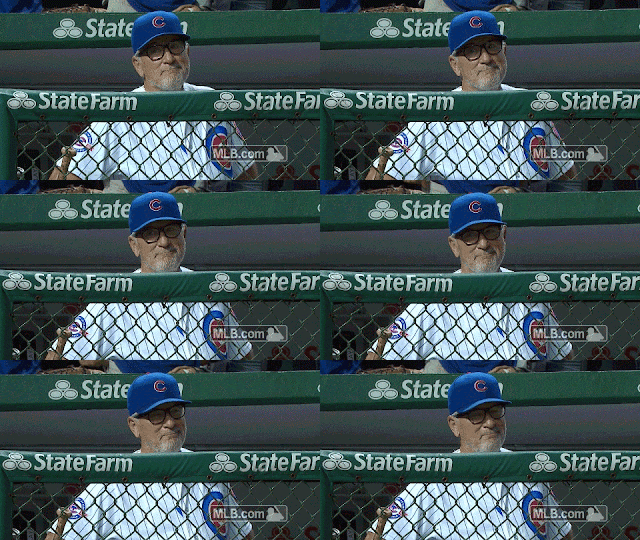
Despite his gaffes and the increasingly frantic complaints from White Sox fans losing their minds that their championship-caliber team is in the hands of this doddering dill weed, La Russa seems in no danger of losing his job because of his close friendship with Jerry Reinsdorf.  That was not the case for another one of baseball's elderly personalities Joe Maddon, who was fired by the Angels in the midst of a twelve-game losing streak.*  Maddon, like La Russa, cultivated a quirky genius of baseball affect, but while La Russa comports himself like a dour prosecutor condescendingly explaining why his office is declining to charge a rogue detective unit that has gone on a spree of stealing blizzard machines from a local dairy queen and turning a police van into a mobile ice cream unit despite them being caught on twelve separate videos, Maddon comes across like a professor who boozes with his undergraduates.  Maddon loves to deploy unorthodox five-man infields, set up squeeze plays, and stash relief pitches in the outfield for tactical purposes.  This season, he issued an intentional walk with the bases loaded in a tied game (the Angels won); with the Cubs, he oversaw a nationally-televised game that involved relief pitcher Travis Wood making a tough catch in left field in the ivy and then ended on a walk-off Jon Lester pinch-hit bunt.  Maddon also brought zoo animals to spring training games, drove around in a van that he referred to as a "shaggin' wagon" and tried to break up a Cubs slump by hiring a magician to entertain the team with a variety of tricks.  It's a routine that was self-consciously quirky and goofy and obviously very annoying except that Maddon won a World Series for the Cubs, which I never thought I would see in my lifetime, so actually all of that was adorable even if the way he used his pitchers in Game 7 may have actually taken years off my life.

Maddon and La Russa represent an increasingly rare kind of baseball manager, the obstinate old guy who is determined to do things his way even if it is obviously self-defeating.  There are few bulbous, purple guys straining at the tensile limits of their baseball uniforms making baffling decisions and then kicking a hat in a way that it seems like it may make them immediately die around the game anymore.  Looking around baseball, most managers seem to be anonymous stubble guys in their 40s and 50s, and their jobs seem increasingly encroached upon by front offices as they oversee constantly shifting lineups and entire relief pitching staffs rotated in and out of the roster with a variety of minor league options and injury list shenanigans like they are hockey lines.  Managers seem mainly to be in charge of vibes, even as many of them appear to be bereft of personality.  Like many changes in baseball, it is obviously smarter and more effective to manage teams this way, but less entertaining than having an angry and possibly day-drunk old guy going with his gut and doing the dumbest thing possible and then yelling at reporters that they never played the game.  Here is a video of Earl Weaver arguing with an umpire and both of them have bizarre Old Man Voices that clearly don't exist anymore to the point that they seem dubbed in by improv comedians.

One disappointing change to baseball in 2022 is that umpires are now talking to us and have boring, normal Ref Voices whereas before the only time we ever heard an umpire speak is when they decided that instead of words they should be bellowing inexplicable throat noises like HRAAAAAAT and DEEEEEKE and we could imagine they all spoke exclusively in a mysterious, runic Ump Language 

I am not sure what the solution is for baseball's crisis in pain in the ass old guy managers.  The game certainly does not need any more Tonys La Russa.  Perhaps we can find a compromise and train the current crop of managers in the art of having truly embarassing on-field meltdowns and also have them smoke several packs a day of cigarettes or watch footage of Burgess Meredith so they know how to rasp weirdly when it is time for them to go nutso on an umpire.  Perhaps Major League Baseball may one day give us a different option in its evolution  between Boringly Optimized and Insanely Stupid.

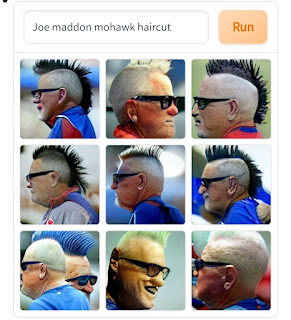
*UPDATE I have just learned that Joe Maddon had just gotten a mohawk haircut in order to rally the troops but was fired before being able to show any of them, presumably leading to a despondent Maddon swilling wine and stewing in his rumpus room while wearing a ridiculous Rally Haircut, this is the most Joe Maddon way to get fired that I can possibly think of. Here is an Advanced AI Rendering:


SOMNAMBULISTS

"...The 'WWI origins' literature has assumed such vast dimensions that no single historian (not even a fantasy figure with an easy command of all the necessary languages) could hope to read it in one lifetime..." writes Christopher Clark in his 2013 WWI origins book The Sleepwalkers. And yet here is his tome, with Clark admitting that he has tossed his work onto the pile while also boldly declaring that he has something fresh to bring to the subject.  Like any historian entering into a crowded, well-trodden field, Clark seeks to refocus the debate-- his overarching argument is that Europe's chaotically unfocused governments combined with some bad contingent decisions allowed the continent to blunder into disaster-- but I think his goal also seems to be writing the definitive recent English-language account of the pre-war years for the twenty-first century that could stand alongside classics like Barbara Tuchman's The Guns of August.  I can't pretend I know enough about the enormous body of literature about the beginnings of the war to say where it stands, but I think that Clark does an admirable job guiding readers through the beguiling international and domestic situations unfolding all over Europe while also having a good eye for the baffling and absurd and often ludicrously-mustachioed personalities who blithely led their countries into an unfathomably horrible conflagration.

One of Clark's contentions is that Serbian politics have traditionally gotten short shrift in grand World War I histories, so he starts there.  He describes the Serbian state as one shaped by regicide and fueled by nationalism and irredentism.  The bloc in power during the 1914 July Crisis had been largely shaped by the party that had assassinated King Alexandar, a child who assumed the throne at the age of twelve after his father abdicated and then four years later performed what Clark describes as a soft coup prematurely putting himself in power in a move orchestrated by his father who then operated as the king all but in name while both father and son alienated Serbians with increasingly authoritarian crackdowns.  Alexandar attracted increased opprobrium when he chose to marry an older woman named Draga Mašin, whom Clark describes as being unpopular because, among other things, she was "well-known for her allegedly numerous sexual liaisons."  

During a heated meeting of the Crown Council, when ministers attempted in vain to dissuade the king from marrying Mašin, the interior minister Djordje Genčić came up with a powerful argument: "sire you cannot marry her. She has been everybody's mistress-- mine included." The minister's reward for his candour was a hard slap across the face-- Genčić would later join the ranks of the regicide conspiracy.

Clark suggests that the murder of Alexandar and Mašin in 1903 brought to power a Serbian government beholden to a radical element that had killed a king and also supported a network of secret organizations that would serve as an unwieldy but influential pressure group within Serbia.  This group would push for increasing Serbian demands on Balkan lands and for hostility against the Austro-Hungarian Empire.

One of Clark's main arguments is that European governments were too disorganized to maintain coherent foreign policies.  Responsibilities, he writes, floated between heads of government, foreign offices, and various ambassadors on the ground, each with their own priorities, connections, and competence.  The other monkey wrench was the presence of monarchs with varying amounts of actual power, effectiveness at wielding it, and ability to communicate to their ministers, the public, and their peer monarchs, many of whom happened to also be cousins with the unfathomably strange family dynamics that come from people who are expected to spend most of their time strutting around in weird military uniforms and bloviating.  These systems led to incoherent policies, communication breakdowns, and swift changes that all created a vortex of chaos swirling over the Continent as the tensions and stakes grew after the assassination of the Archduke.

It is no surprise that the most compelling personality Clark writes about is Kaiser Wilhelm II.  Clark is a historian of Prussia and his previous work includes a biography of Wilhelm, which I am curious to read because his portrayal of the German monarch is one of the nastiest and funniest I have seen in a book like this.  Clark describes Wilhelm as a blundering oaf, a belligerent hawk constantly calling for war only to panic and seek conciliation when it looks like he might actually provoke a real conflict, and as personally extremely annoying. 

"It is worth picturing this scene--" Clark writes about a meeting between the German and Russian governments in 1912, "the glare of the sunlight on the broken stone of the old fort, [Russian prime minister Vladimir] Kokovtsov sweltering in his jacket, the Kaiser red-faced, his moustaches trembling as he warmed to his theme, gesticulating, oblivious to the discomfort of his companions, and behind him the Tsar, trying desperately to end the ordeal and get the party out of the sun."  Earlier in this summit, Clark writes that Wilhelm harangued the Russian foreign minister Sergei Sazonov "for over an hour in detail about his relationship with his parents, who, he claimed, had never loved him."  

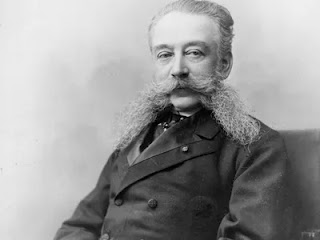
Even his mustache seems to be saying "enough with this guy"

This is the point of the review where a normal person would discuss how Clark sets up the interplay of increasingly dangerous European power dynamics that could explode into a widespread war (the Austrians, for example, had considered the possibility of what they called a "Balkan inception" long before the assassination of Franz Ferdinand and even longer before the phrase could be used to describe an ill-considered bootleg DVD purchase) with bad and almost blasé decisions by European statesman.  But you are reading a book review on a blogspot post that is largely an angry jeremiad against Tony La Russa, so it's important to point out the quantity of World War I Guys who spring out of these pages as tossed off asides or in photos.  Clark casually mentions that the head of the British mission to the Ottoman Navy was a person with the arresting name Arthur Limpus.  Almost everyone pictured has alarming and terrifying facial hair that I can imagine the tension in the room not only from high-powered negotiations but also the ever-present danger of ministers or adjutants or other minor dignitaries somehow turning their faces in the exact dangerous angle that results in a tangle of dangling mustaches, whiskers, and styles that can only be described as side-beards as white-gloved waiters sprint for scissors and dashing junior military aids draw their sabers, much like how the alliance system led to powers like Britain, Russia, Germany, and sometimes Italy getting sucked into a dispute between Austria and Serbia. 

It is impossible to imagine Russian Prime Minister Ivan Goremykin making it through an entire day without getting his mustachios stuck in some sort of gears or dumbwaiter 

It has become fashionable for historians to relate their work to the present context instead of leaving it to succeeding historians to take a look at what was going on when the book was written and decide that their work on Ottoman tapestries is reflecting Contemporary Cold War Tensions or something.  In this case, Clark is concerned about the breakdown of the international order in Europe during the European sovereign debt crisis unfolding in the early 2010s as the book was coming together.  Reading this less than a decade later, this view seems quaint.  Unfortunately, I think readers in 2022 need little convincing about the fragility of peace in Europe, and while Clark, writing in 2013, claims that foreign relations are more streamlined and less convoluted than they were in 1914, I think he would agree that world leaders don't have the decency to parade around with elaborate and impossibly stupid mustaches anymore.